Get ready for the return of the Sagan-started, ever-popular television show Cosmos, coming in 2014, featuring Neil deGrasse Tyson! Image Credit : Penny4NASA via Milky way scientistsArriving on Fox and National Geographic channels in spring 2014 as part of a 13-episode series, “Cosmos: A Spacetime Odyssey” builds off Carl Sagan’s groundbreaking series of a similar name (subtitled “A Personal Voyage”) seen on PBS more than 30 years ago.
There’s a lot of geek cred behind the refreshed “Cosmos,“ as Sagan’s widow Ann Druyan, who played a major role in the production of the original series, serves as an executive producer and writer for the new episodes. Astronomer and original writer Steven Soter makes a return, too.
Continue reading at CNET.
Tag: science
-
-
July 9th, 2013 10:50pm
Since, in the long run, every planetary civilization will be endangered by impacts from space, every surviving civilization is obliged to become spacefaring–not because of exploratory or romantic zeal, but for the most practical reason imaginable: staying alive… If our long-term survival is at stake, we have a basic responsibility to our species to venture to other worlds.— Carl Sagan
-
April 20th, 2013 3:20pm


There’s a lot of debris floating around in space, and researchers at the Lawrence Livermore National Lab are using supercomputers, optical sensors and other technology to track even small objects that could damage important satellites.
John Henderson, a space scientist at LLNL, explains:
“Everybody uses GPS to get from here to there. We have satellite television, we have weather reports, farmers use satellite data for monitoring crops. If you have a piece of satellite debris whacking into a satellite, in the worst case you now lose that capability. In February of 2009, that actually happened where there was an Iridium communications satellite that collided with a dead Russian Kosmos satellite and so that basically took out a $100 million dollar satellite.
There’s somewhere between 100,000 to 200,000 pieces of debris that we would like to be tracking. And so the supercomputing capabilities that we have here at Livermore are one way to keep track of that.”
-
March 14th, 2013 4:38am
-
March 12th, 2013 11:35pm
-
February 26th, 2013 12:52pm
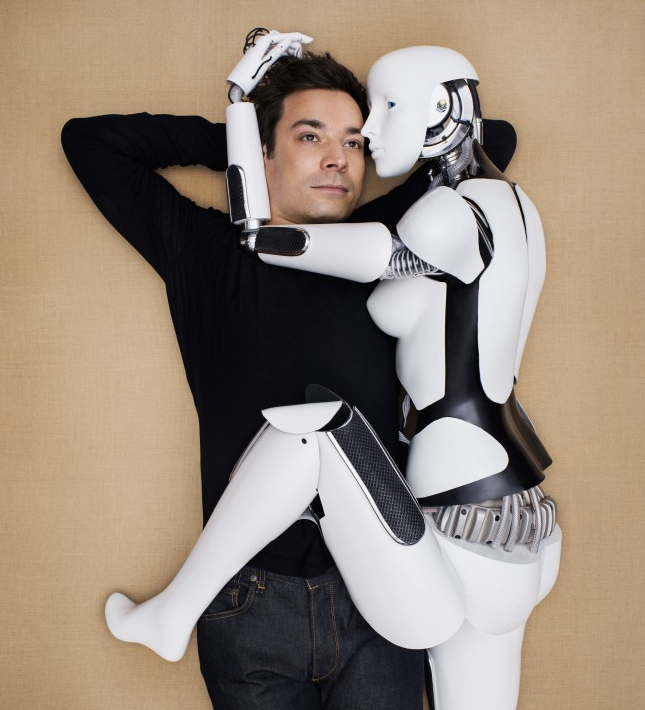
“It may be hard to believe, but before the end of this century, 70 percent of today’s occupations will likewise be replaced by automation. Yes, dear reader, even you will have your job taken away by machines. In other words, robot replacement is just a matter of time. This upheaval is being led by a second wave of automation, one that is centered on artificial cognition, cheap sensors, machine learning, and distributed smarts. This deep automation will touch all jobs, from manual labor to knowledge work.
First, machines will consolidate their gains in already-automated industries. After robots finish replacing assembly line workers, they will replace the workers in warehouses. Speedy bots able to lift 150 pounds all day long will retrieve boxes, sort them, and load them onto trucks. Fruit and vegetable picking will continue to be robotized until no humans pick outside of specialty farms. Pharmacies will feature a single pill-dispensing robot in the back while the pharmacists focus on patient consulting. Next, the more dexterous chores of cleaning in offices and schools will be taken over by late-night robots, starting with easy-to-do floors and windows and eventually getting to toilets. The highway legs of long-haul trucking routes will be driven by robots embedded in truck cabs.
All the while, robots will continue their migration into white-collar work. We already have artificial intelligence in many of our machines; we just don’t call it that. Witness one piece of software by Narrative Science (profiled in issue 20.05) that can write newspaper stories about sports games directly from the games’ stats or generate a synopsis of a company’s stock performance each day from bits of text around the web. Any job dealing with reams of paperwork will be taken over by bots, including much of medicine. Even those areas of medicine not defined by paperwork, such as surgery, are becoming increasingly robotic. The rote tasks of any information-intensive job can be automated. It doesn’t matter if you are a doctor, lawyer, architect, reporter, or even programmer: The robot takeover will be epic.
And it has already begun.”
-
December 10th, 2012 12:51am
-
December 7th, 2012 10:03am
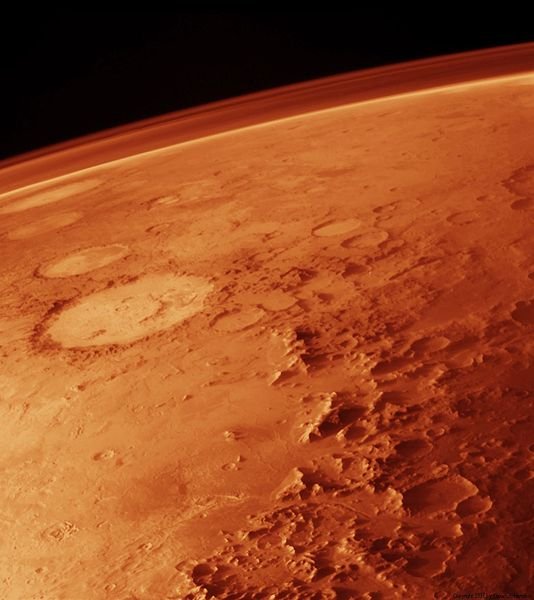
China prepares to grow vegetables on Mars
Chinese astronauts are preparing to grow fresh vegetables on Mars and the moon after researchers successfully completed a preliminary test in Beijing, state media reported.
Four kinds of vegetables were grown in an “ecological life support system”, a 300 cubic metre cabin which will allow astronauts to develop their own stocks of air, water and food while on space missions, Xinhua news agency said Monday.
The system, which relies on plants and algae, is “expected to be used in extra-terrestrial bases on the moon or Mars”, the report said.
Participants in the experiment could “harvest fresh vegetables for meals”, Xinhua quoted Deng Yibing, a researcher at Beijing’s Chinese Astronaut Research and Training Centre, as saying.
“Chinese astronauts may get fresh vegetables and oxygen supplies by gardening in extra-terrestrial bases in the future,” the report said, adding that the experiment was the first of its kind in China.
China has said it will land an exploratory craft on the moon for the first time next year, as part of an ambitious space programme that includes a long-term plan for a manned moon landing.
The Asian superpower has been ramping up its manned space activities as the United States, long the leader in the field, has scaled back some of its programmes, such as retiring its iconic space shuttle fleet.
In its last white paper on space, China said it was working towards landing a man on the moon — a feat so far only achieved by the United States, most recently in 1972 — although it did not give a time frame.
China’s first astronaut Yang Liwei said last month that Chinese astronauts may start a branch of China’s ruling Communist Party in space, state media reported.
“If we establish a party branch in space, it would also be the ‘highest’ of its kind in the world,” Xinhua quoted Yang as saying.
The astronaut was launched into space and orbited the earth aboard the Shenzhou 5 spacecraft in 2003.
-
December 7th, 2012 12:20am
Apollo Veteran: Skip Asteroid, Go to the Moon: It’s 40 years to the day that the final mission to the moon launched. Discovery News speaks with Apollo 17 astronaut and geologist Harrison “Jack” Schmitt about where he thinks the Earth’s only satellite came from and why he thinks a NASA manned asteroid mission is a mistake.
“I think an asteroid is a diversion, if the ultimate goal is to get to Mars, you have a satellite only three days away that has a great deal of science as well as resources. The science of the moon has just been scratched. We’ve hardly explored the moon.” — Schmitt
-
December 6th, 2012 9:55pm
I have approximate answers and possible beliefs and different degrees of certainty about different things but I’m not absolutely sure of anything and on many things I don’t know anything about, such as whether it means anything to ask why we’re here and what the question might mean. I might think about it a little but if I can’t figure it out then I go onto something else but I don’t have to know an answer. I don’t feel frightened by not knowing things. By being lost in a mysterious universe without having any purpose, which is the way it is as far as I can tell, possibly. But it doesn’t frighten me.—– Richard Feynman.
I love this man. One of the most brilliant men of our time since Einstein, Feynman saw through the educational system, explored the world in a more rational, skeptical way by interacting with the natural world & testing his knowledge & skepticism through experiment.
Once he realized the cause & effect of his contributions to science, more specifically – to the disastrous aftermath of the atomic bomb – he completely swore off the military industry in despise of their actual motives.
His life was well lived as a successful scientist, educator, husband, father, friend. He is succeeded only by those whom he’s inspired & educated through the benchmarks & platforms he established in physics (& science in general) for future generations of all fields.
(via sagansense)