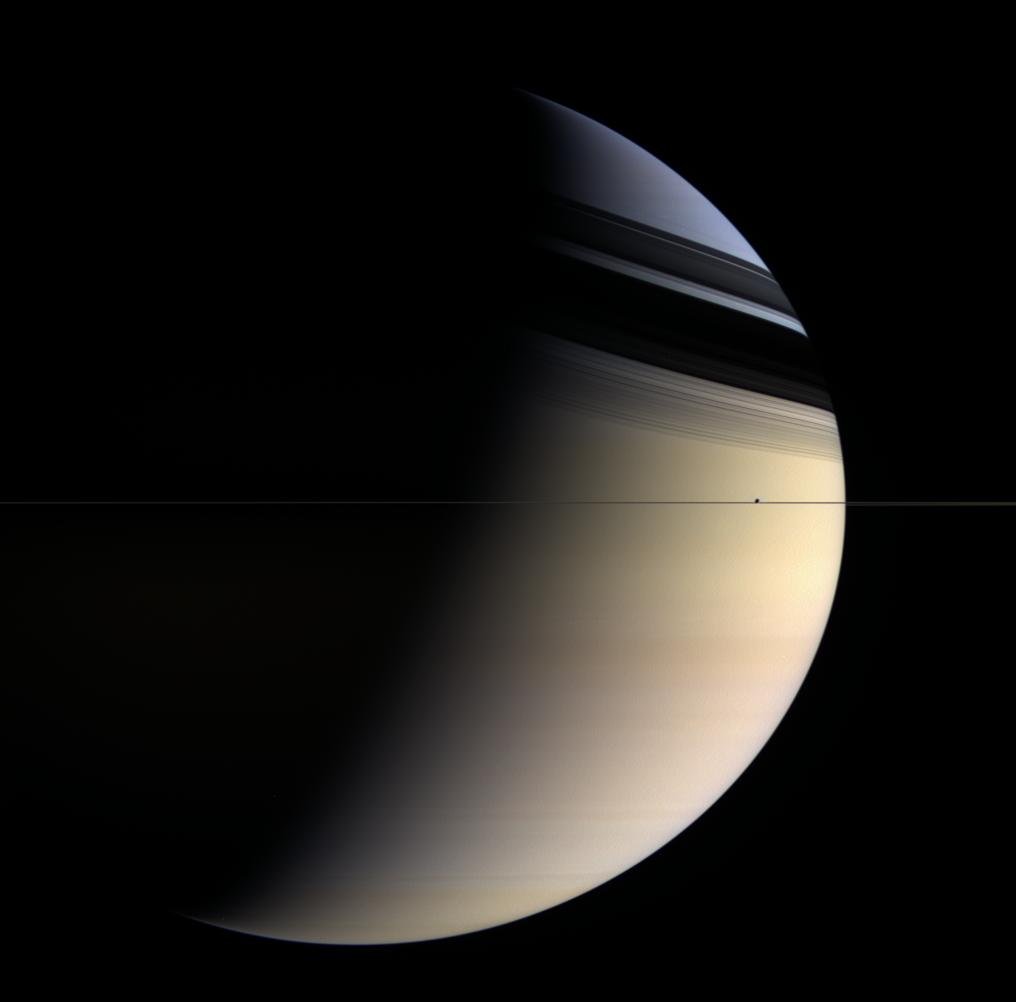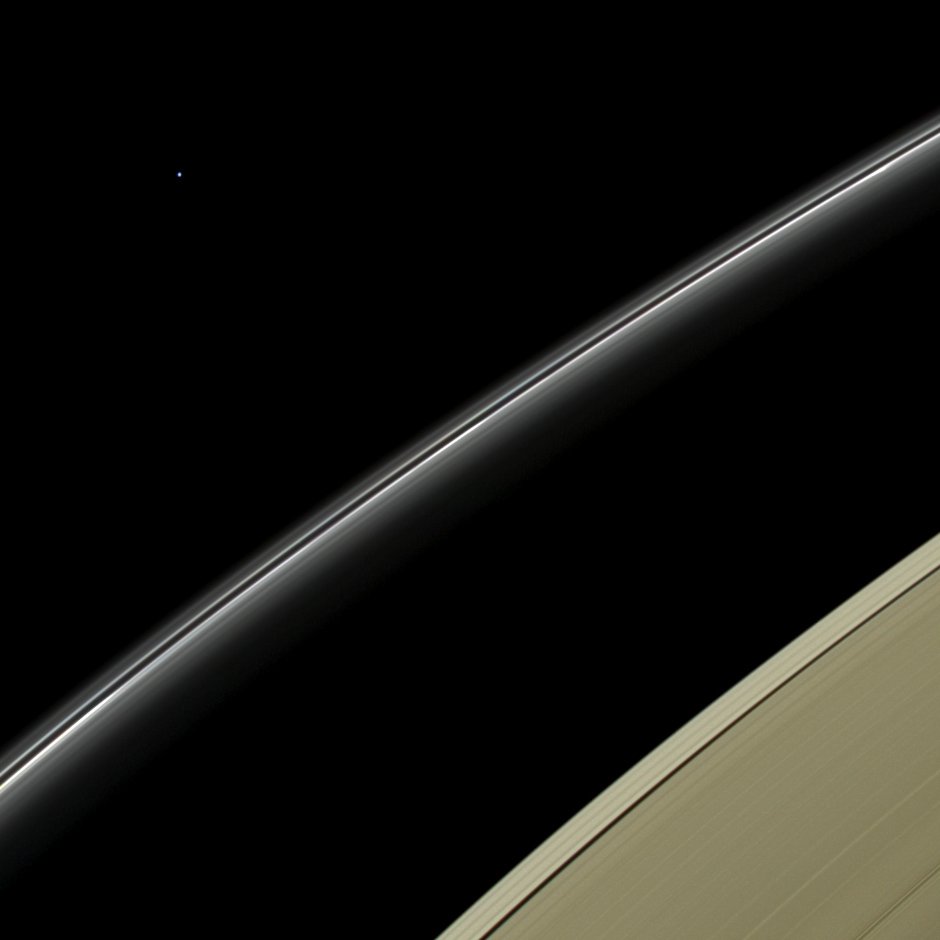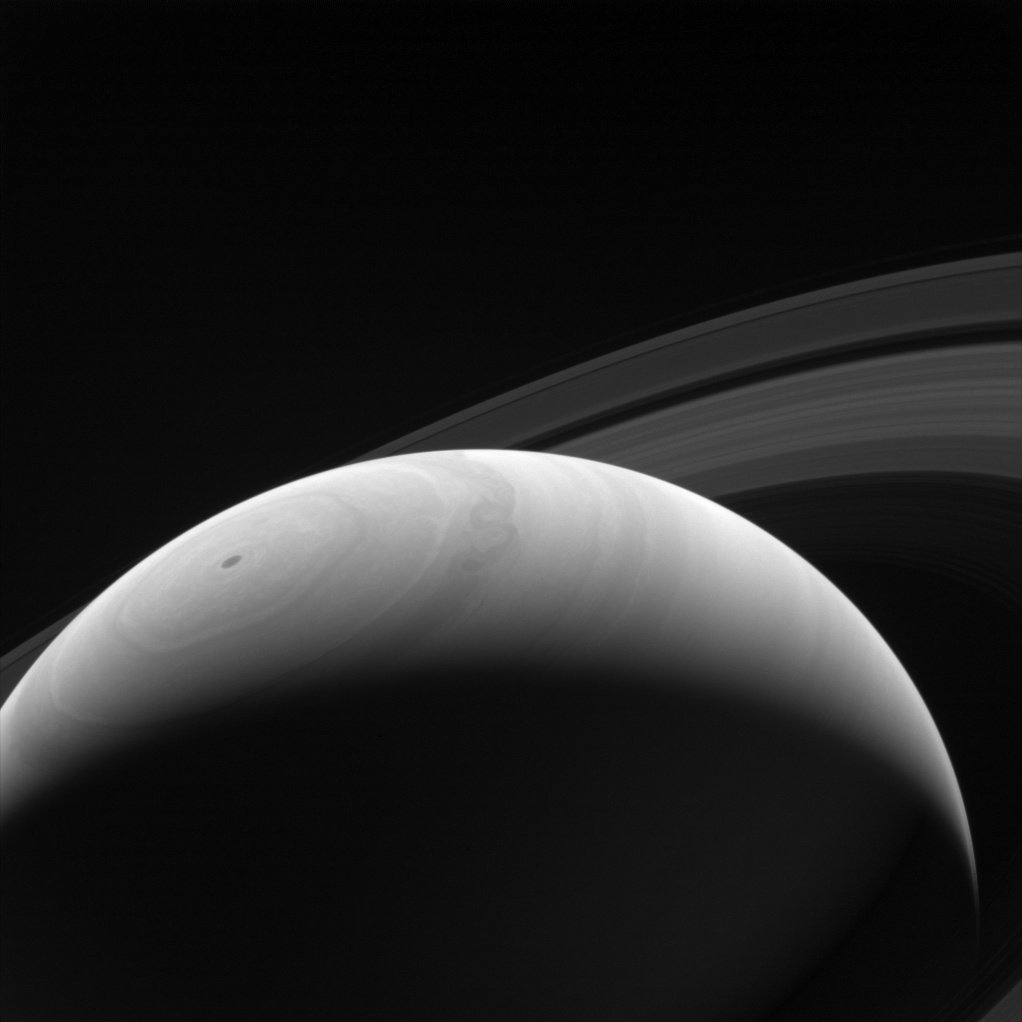
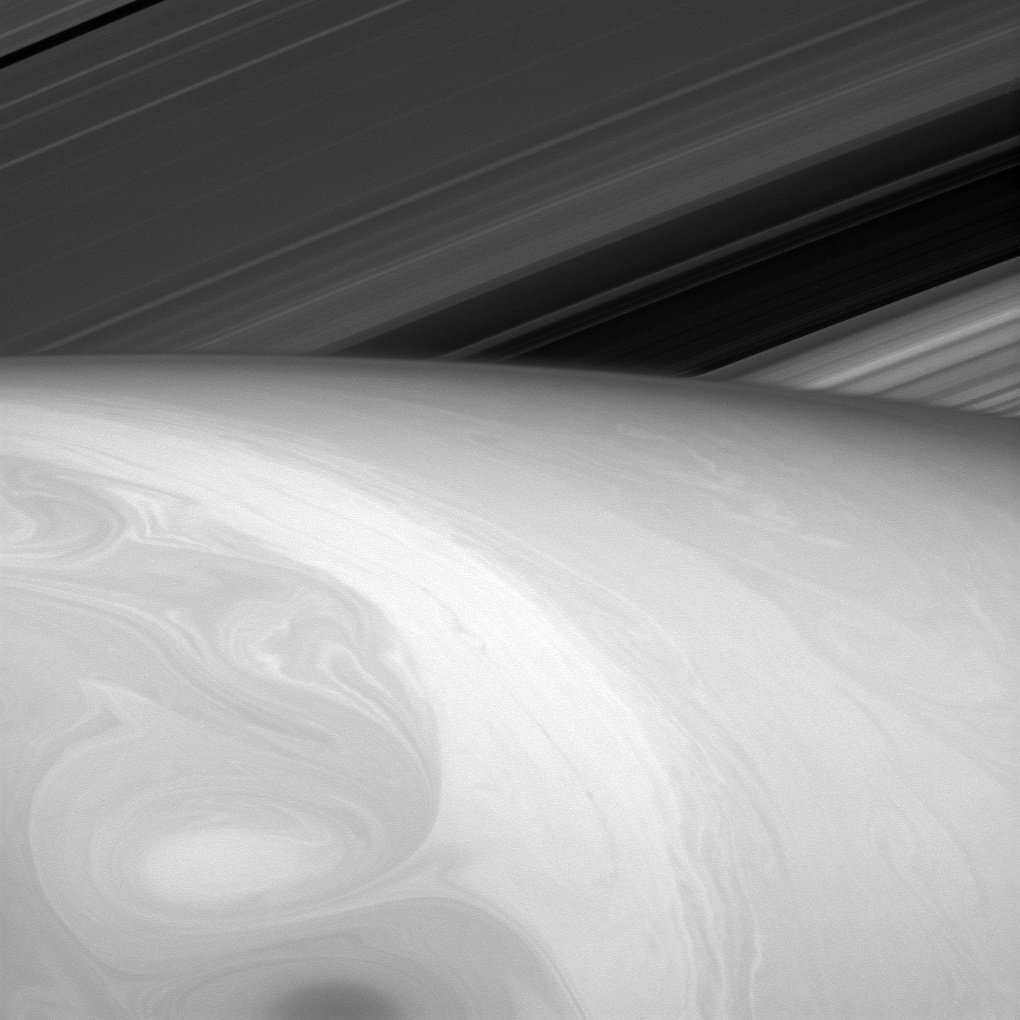
Daily reminder that we have a spacecraft orbiting Saturn—over one billion miles (1.636×9 km) away—and it transmits photos like these to us regularly. Thank you, Cassini–Huygens!

Daily reminder that we have a spacecraft orbiting Saturn—over one billion miles (1.636×9 km) away—and it transmits photos like these to us regularly. Thank you, Cassini–Huygens!
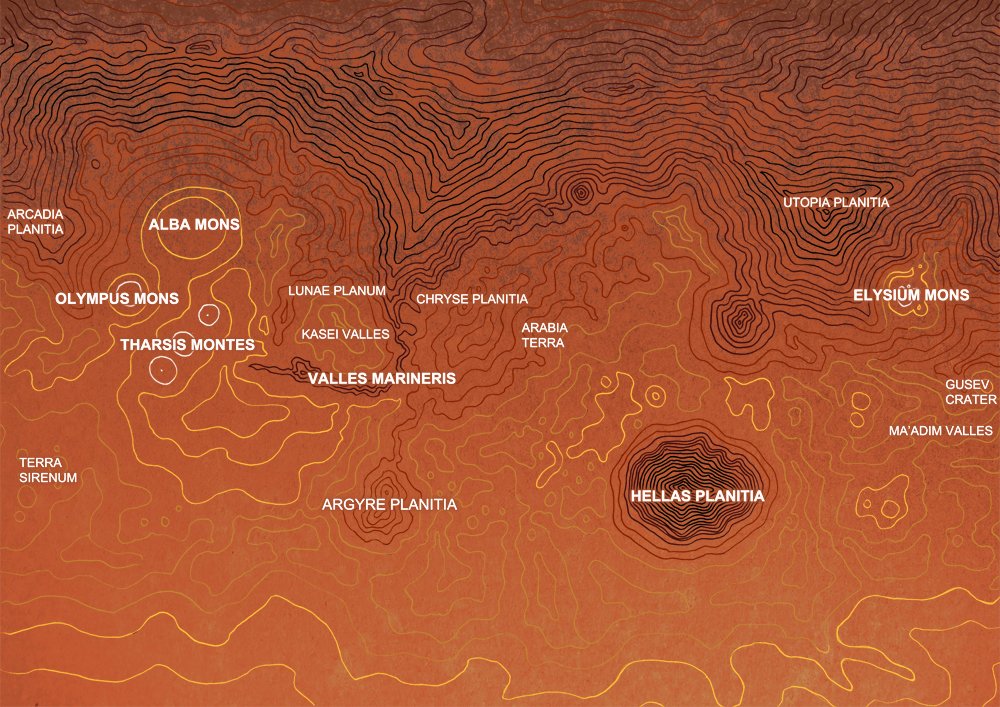
The geography-cartography-topography of the planet Mars (which took me ageeeees to complete)! You can see the whole project here.
I wanted to show the striking dichotomy of the Marsian surface (the two hemispheres differ in elevation by 1 to 3 km). While the northern one-third is relatively flat and lies below the conventional ‘zero elevation’ level (aka the “sea level”, only there’s no ocean to evaluate), the southern hemisphere is mountains and highlands heavily cratered. Plus there are large river valleys and outflow channels cutting through the separation. Our deserts are quite boring in comparison!

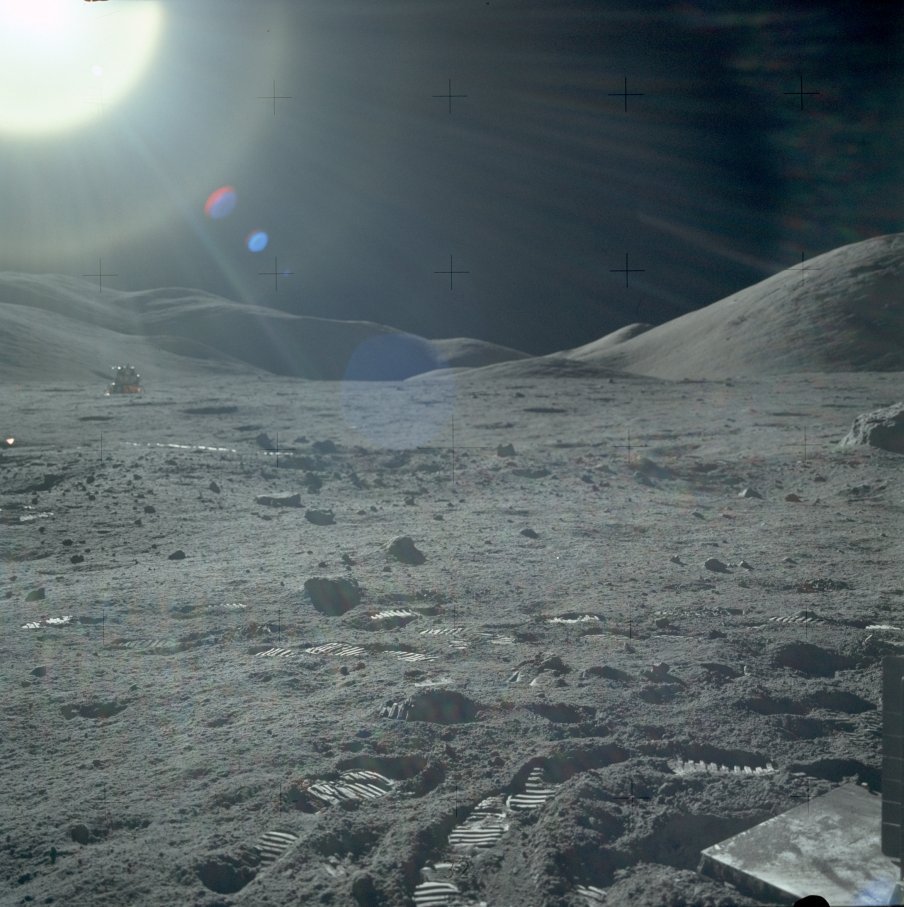
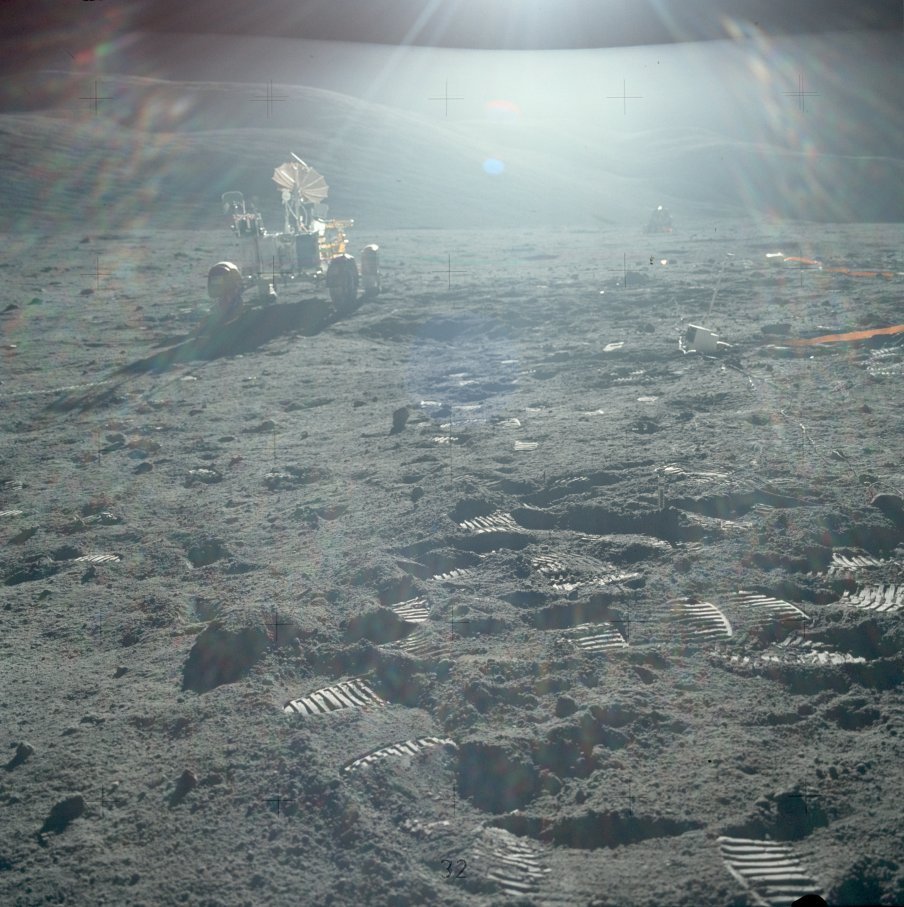
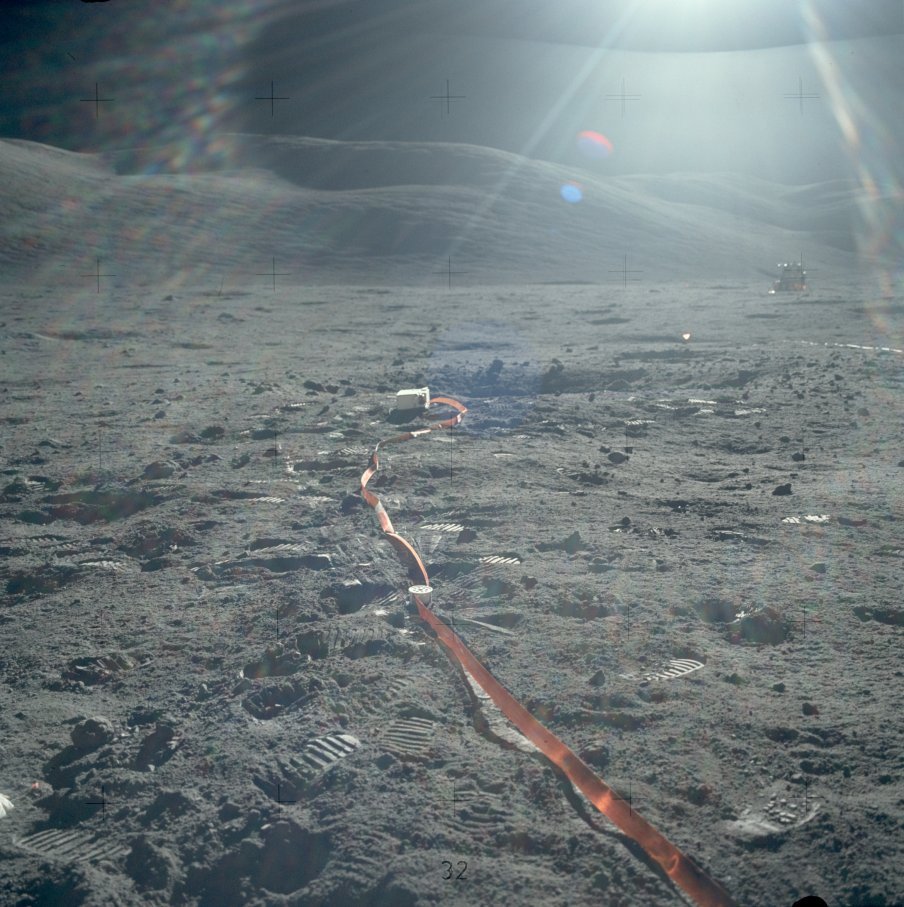
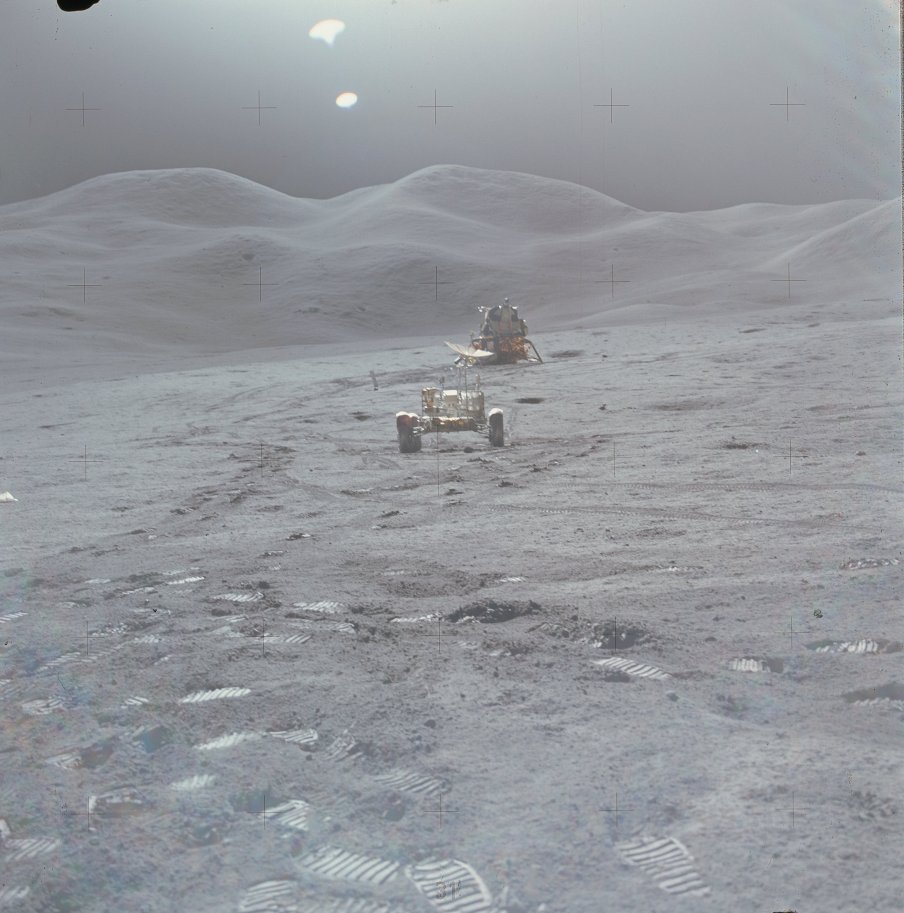
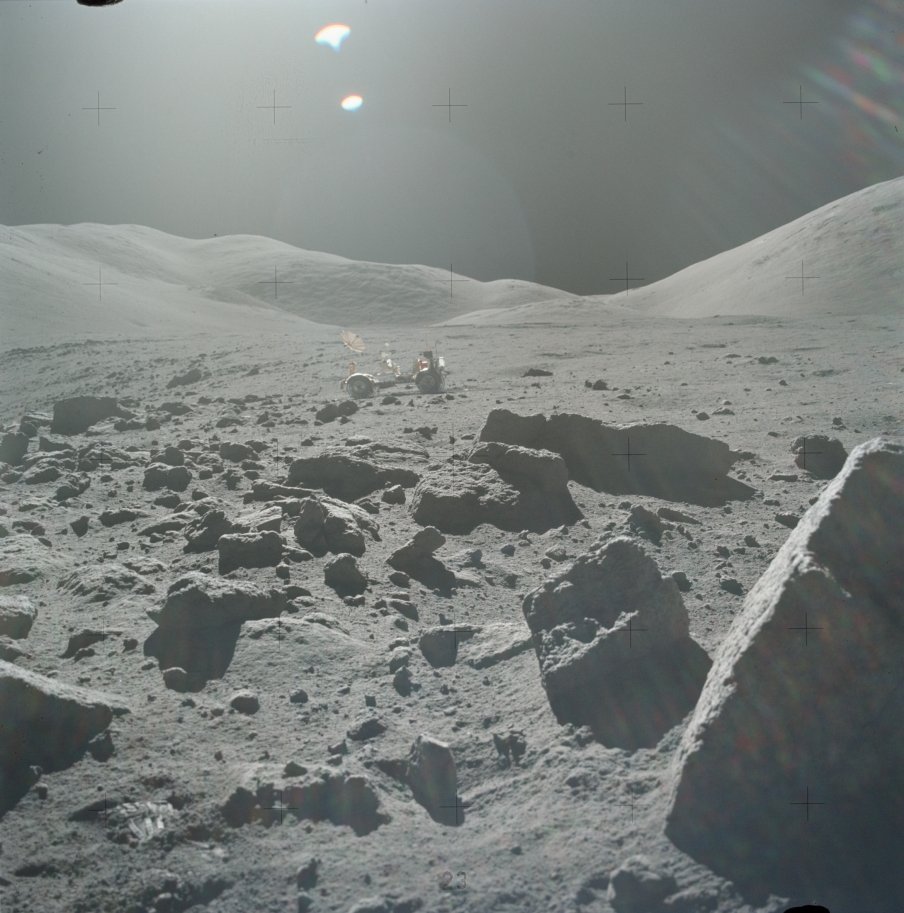
The Moon’s Fragile Atmosphere
The moon orbits the earth with a period of four weeks ( a month) and during the orbit it always has the same side facing the earth. So this means that on the moon there is day and night, but they are both two weeks long instead of 24 hours.
The Moon’s daylight is brighter and harsher than the Earth’s. There is no atmosphere to scatter the light, no clouds to shade it, and no ozone layer to block the sunburning ultraviolet light. However, there is a very, very thin layer of gases on the lunar surface that can almost be called an atmosphere. Technically, it’s considered a surface boundary exosphere.
One of the critical differences between the atmospheres of Earth and the moon is how atmospheric molecules move. Here in the dense atmosphere at the surface of Earth, the molecules’ motion is dominated by collisions between the molecules.The exosphere is so thin that molecules in the lunar exosphere almost never collide with each other. During the lunar night, the Moon’s exosphere mostly falls to the ground. When sunlight returns, the solar wind kicks up new particles to replenish the exosphere.
The intense ultraviolet sunlight kicks electrons off particles in the lunar soil, giving those particles an electric charge that can cause them to levitate. Ambient electric fields lift these charged dust particles as high as kilometers above the surface, forming an important part of the exosphere. Moon dust wrecked havoc with the Apollo spacesuits, which were nearly threadbare by the time they returned to Earth. Levitating dust can get into equipment, spacesuits, and computers, causing damage and shortening the hardware’s useful life. Knowing how much dust is floating around in the exosphere and how it behaves will help engineers design next-generation lunar hardware.
Credit: NASA
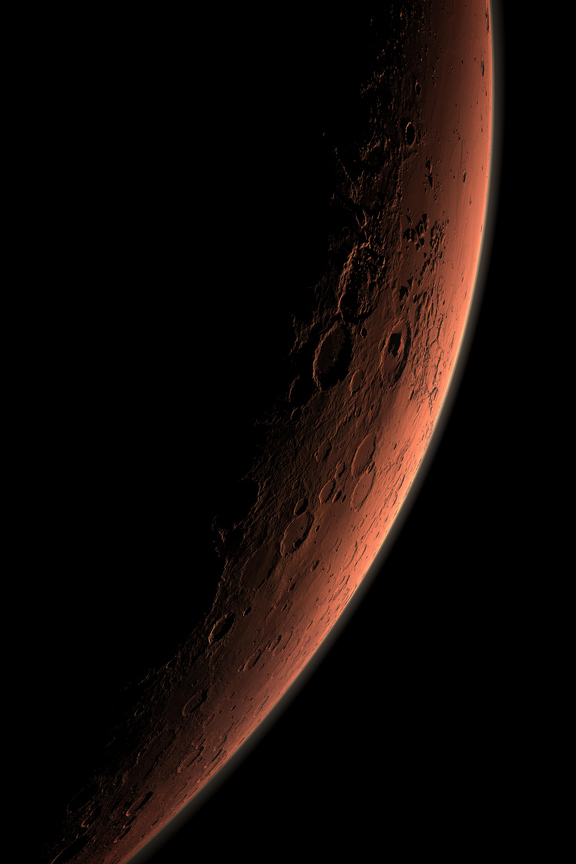
“Mars has become a kind of mythic arena onto which we’ve projected our earthly hopes and fears. However, in our time, we’ve come to find that the real Mars is a world of wonders. […] We have sifted the sand of Mars, established a presence there, and fulfilled a century of dreams.” — Carl Sagan, Cosmos: Part 5 – Blues For a Red Planet
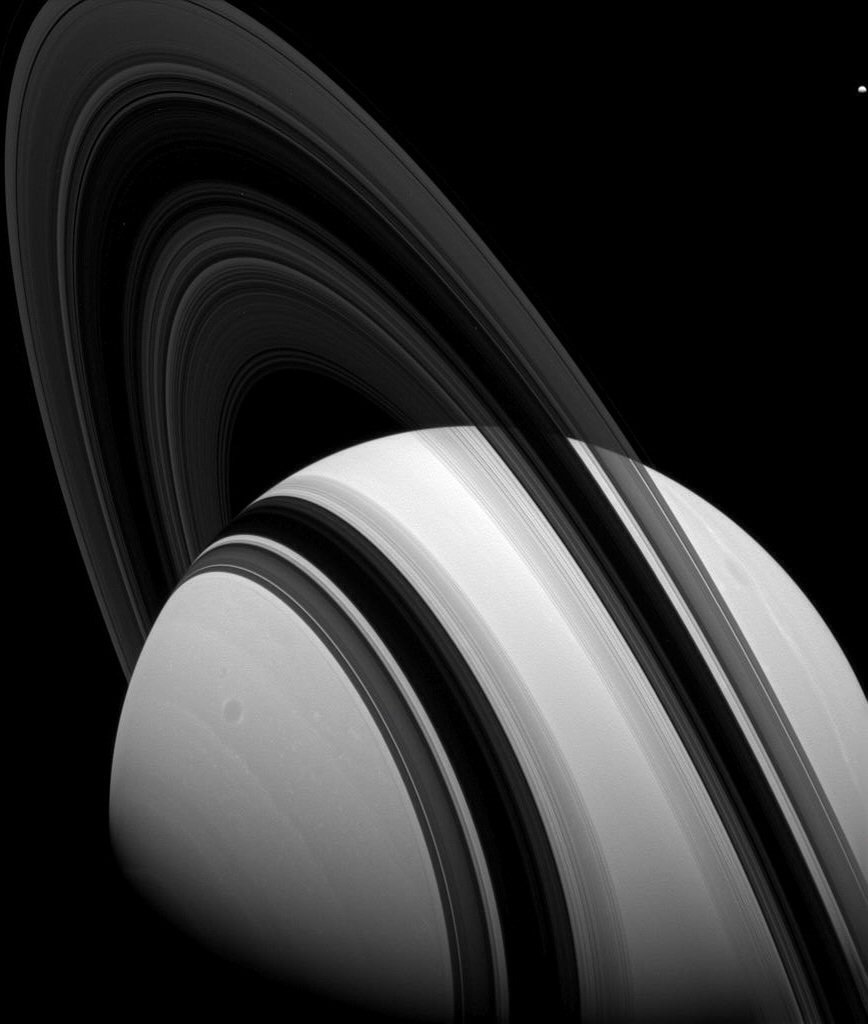
Saturn’s Rings from the Dark Side
From Earth, we usually see Saturn’s rings from the same side of the ring plane that the Sun illuminates them — one might call this the bright side. Geometrically, in the above picture taken in August by the robot Cassini spacecraft now orbiting Saturn, the Sun is behind the camera but on the other side of the ring plane. Such a vantage point gives a breathtaking views of the most splendid ring system in the Solar System. Strangely, the rings have similarities to a photographic negative of a front view. For example, the dark band in the middle is actually the normally bright B-ring. The ring brightness as recorded from different angles indicates ring thickness and particle density of ring particles. At the top right of the frame is Saturn’s moon Tethys, which although harder to find, contains much more mass than the entire ring system.Image Credit: Cassini Imaging Team, SSI, JPL, ESA, NASA
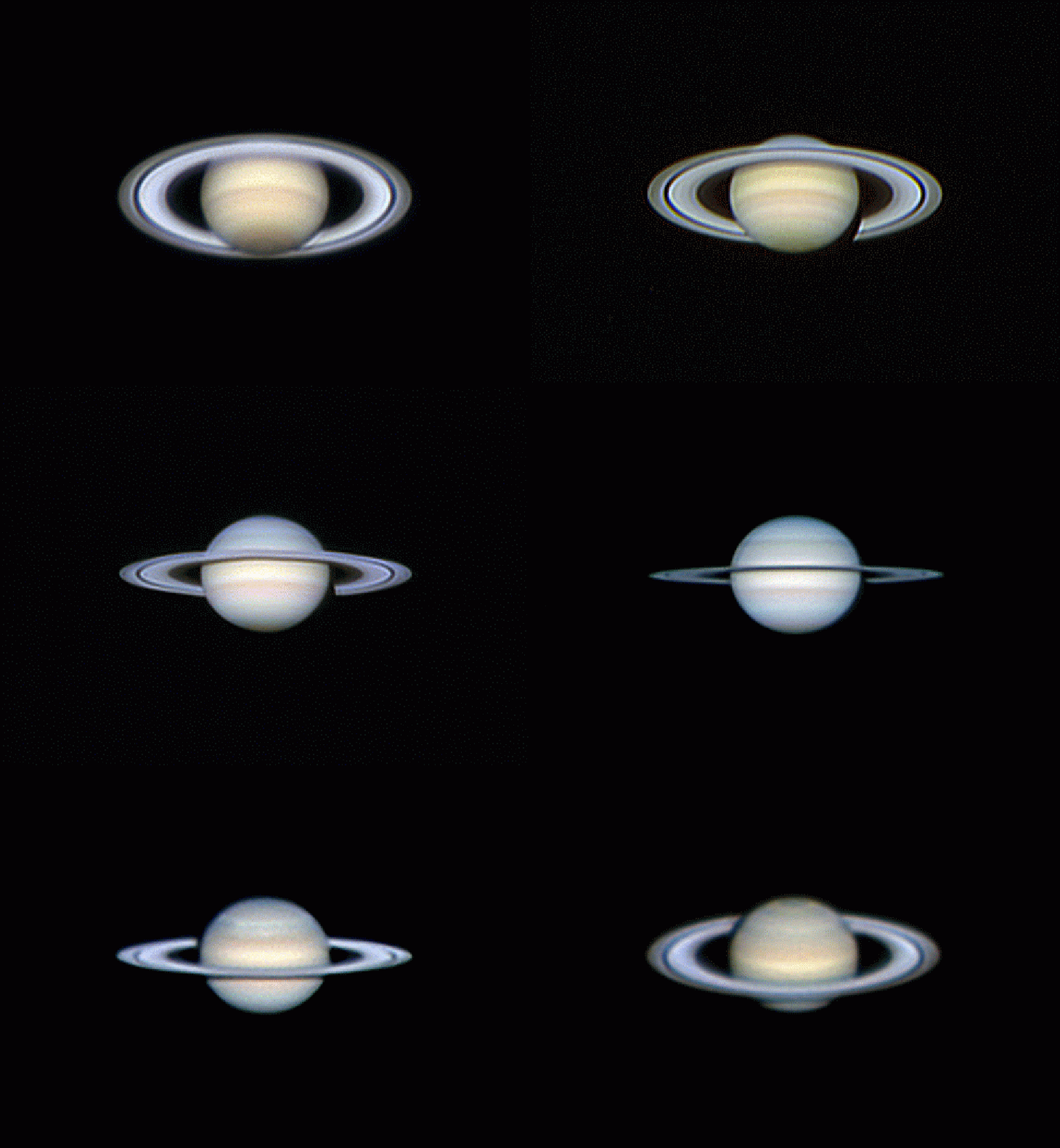
A Decade of Saturn by David Kolb
Here is an animation of Saturns rings covering a ten year time span from 2003 through 2013. The images were taken with an eight inch Meade Schmidt-Cassegrain telescope, and various web cameras.
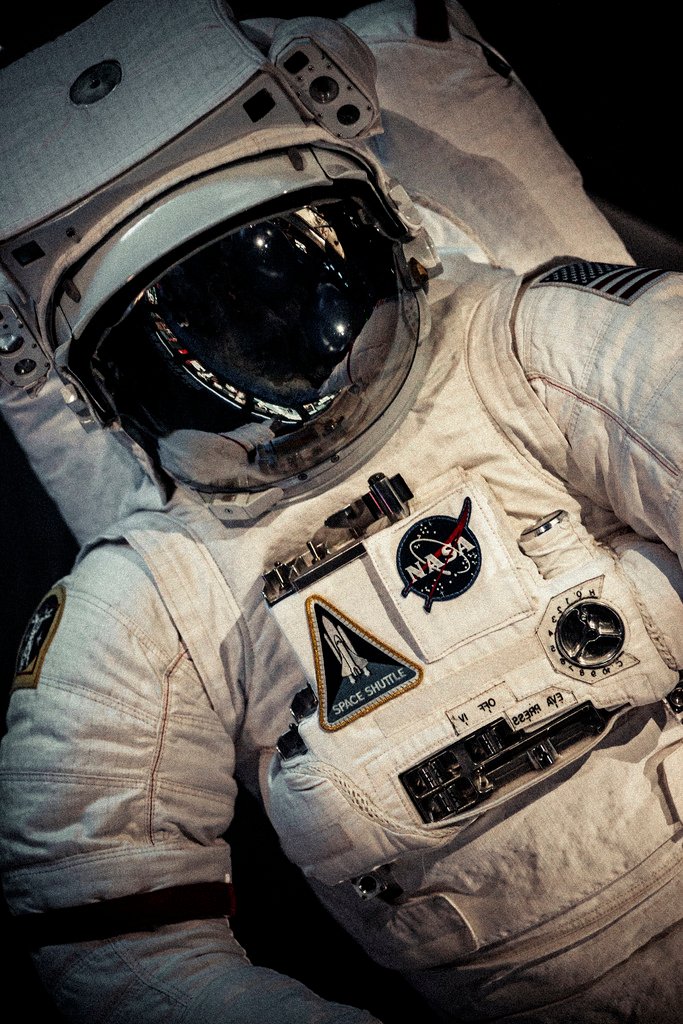
having a look
Source: exclamationpoint
‘Water bears’ are first animal to survive space vacuum
Tiny invertebrates called ‘water bears’ can survive in the vacuum of space, a European Space Agency experiment has shown. They are the first animals known to be able to survive the harsh combination of low pressure and intense radiation found in space.
Water bears, also known as tardigrades, are known for their virtual indestructibility on Earth. The creatures can survive intense pressures, huge doses of radiation, and years of being dried out.
To further test their hardiness, Ingemar Jönsson of Sweden’s Kristianstad University and colleagues launched two species of dried-up tardigrades from Kazakhstan in September 2007 aboard ESA’s FOTON-M3 mission, which carried a variety of experimental payloads.
After 10 days of exposure to space, the satellite returned to Earth. The tardigrades were retrieved and rehydrated to test how they reacted to the airless conditions in space, as well as ultraviolet radiation from the Sun and charged particles from space called cosmic rays.
The vacuum itself seemed to have little effect on the creatures. But ultraviolet radiation, which can damage cellular material and DNA, did take its toll.
Dried out
In one of the two species tested, 68% of specimens that were shielded from higher-energy radiation from the Sun were revived within 30 minutes of being rehydrated. Many of these tardigrades went on to lay eggs that successfully hatched.
But only a handful of animals survived full exposure to the Sun’s UV light, which is more than 1000 times stronger in space than on the Earth’s surface.
Before this experiment, only lichen and bacteria were known to be able to survive exposure to the combination of vacuum and space radiation.
“No animal has survived open space before,” says developmental biologist Bob Goldstein of the University of North Carolina at Chapel Hill, who was not affiliated with the study. “The finding that animals survived rehydration after 10 days in open space – and then produced viable embryos as well – is really remarkable.”
This ability to survive in extreme conditions “might be important when we consider the habitability of other bodies in our solar system or beyond,” says astrobiologist Gerda Horneck of the German Aerospace Center. But the results say little about how the animals might develop and reproduce in harsh environments, Horneck says.
The authors aren’t sure what causes the animals to be as resistant as they are to the effects of ultraviolet radiation. They speculate their hardiness might stem from the same adaptations that enable tardigrades to bounce back from being dried out.
Journal reference: Current Biology, vol 18, p R729
Very interesting!
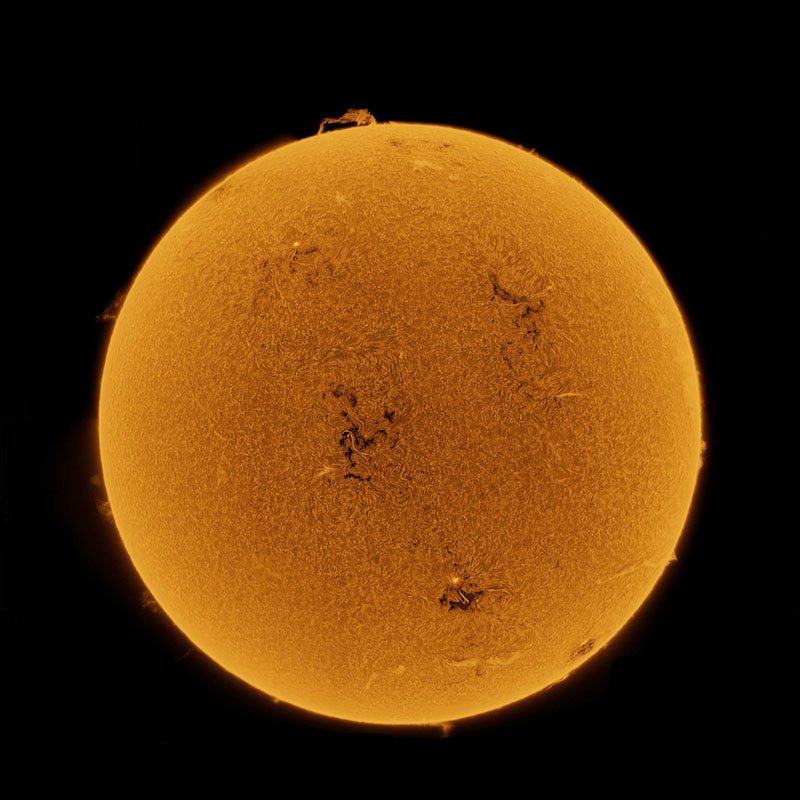
“Here is a shot of the Sun from 10-21-12. Taken using a PST40, Flea3 webcam and 2x barlow. The full disk is a composite of 31 individual frames. 30 second AVIs comprising around 3500 frames were captured to create the subs.”