Tag: nasa
-
-
October 7th, 2015 9:52pm
New Images of Pluto
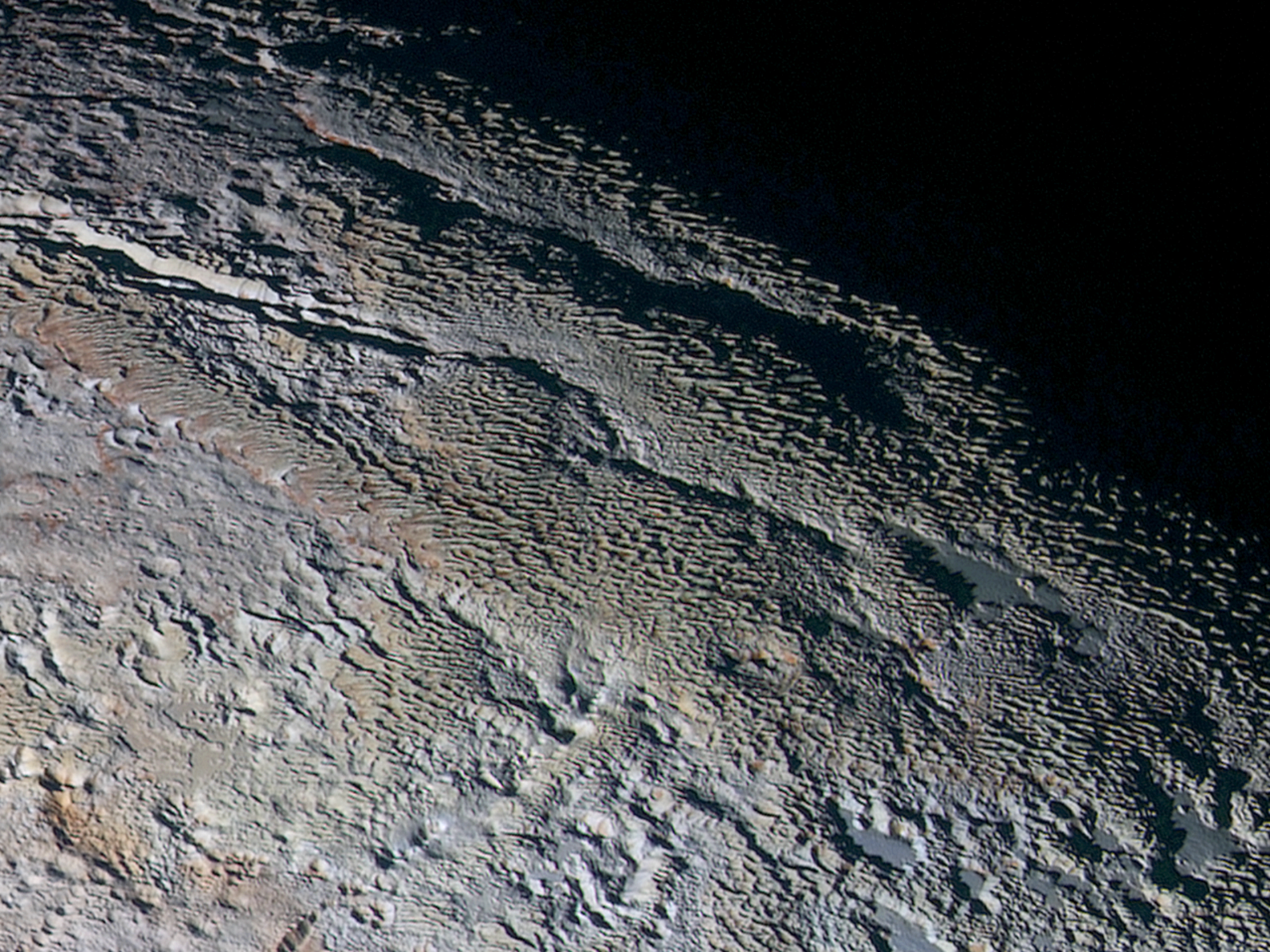
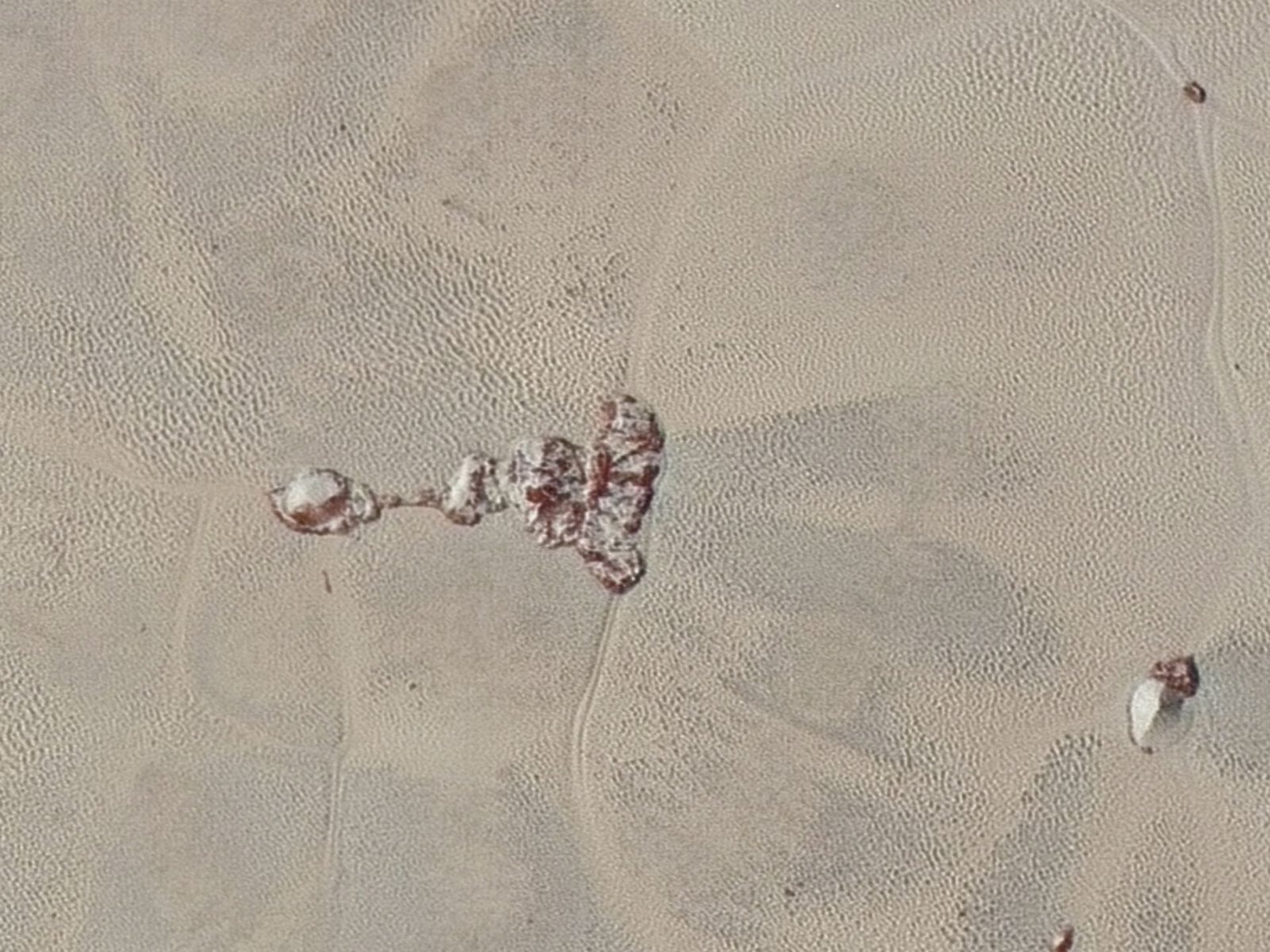
NASA’s released new images captured of the surface of Pluto. This includes regions of scale-like texture (top) and a strange, textured surface surrounding some ice mountains (bottom).
Over the course of the next year, NASA will be receiving pictures from the Pluto exploration spacecraft, New Horizons.
(Image credit: NASA/JHUAPL/SWRI)
-
September 26th, 2015 8:52pm

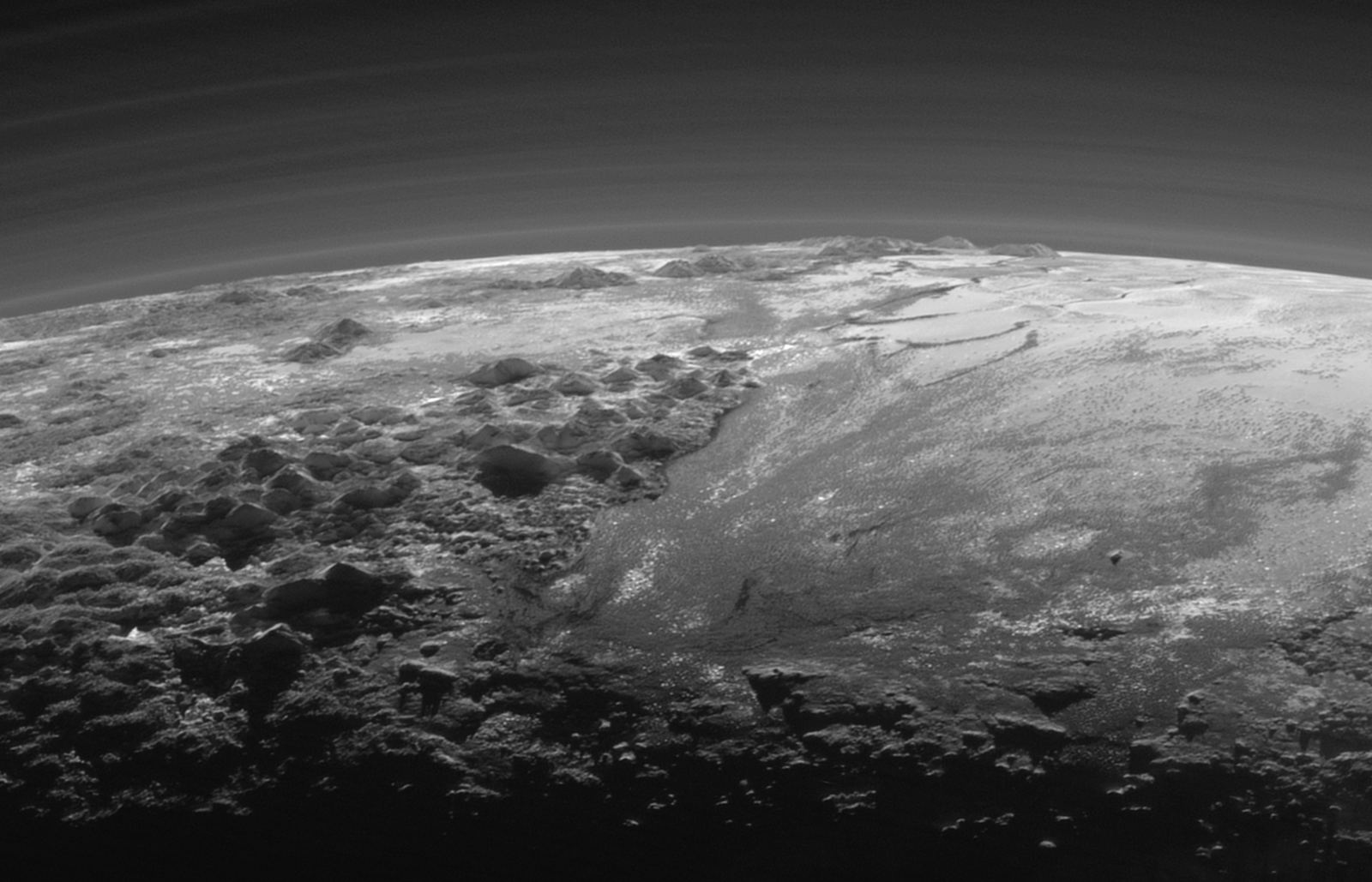
How could I not post Pluto’s landscapes with dramatic backlighting from the sun?
Just 15 minutes after its closest approach to Pluto on July 14, 2015,
NASA’s New Horizons spacecraft looked back toward the sun and captured
this near-sunset view of the rugged, icy mountains and flat ice plains
extending to Pluto’s horizon. The image was taken
from a distance of 11,000 miles (18,000 kilometers) to Pluto; the scene
is 780 miles (1,250 kilometers) wide.
credits: NASA/JHUAPL/SwRI
-
August 6th, 2014 1:32am

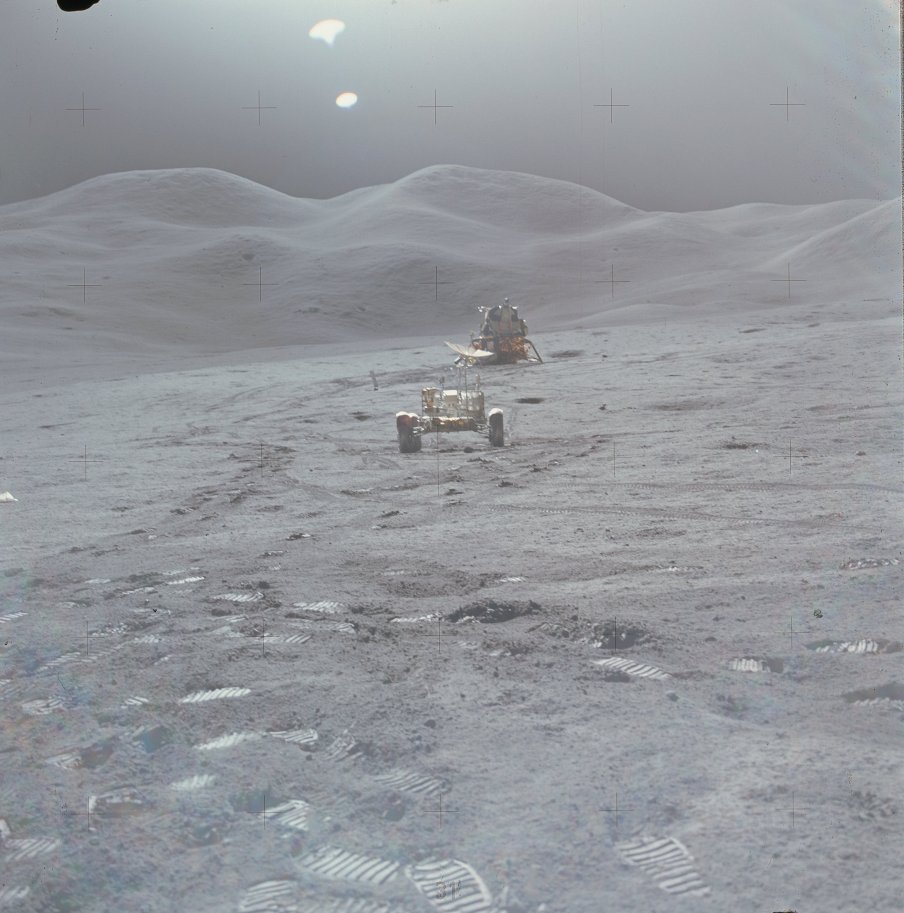
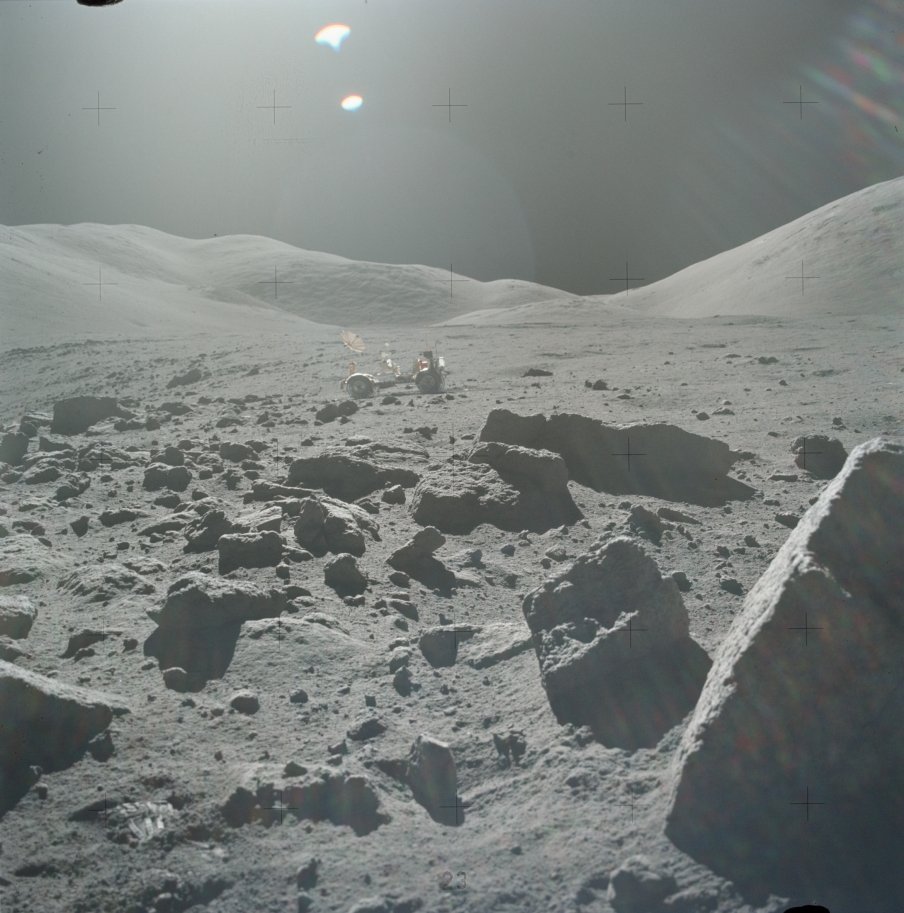
The Moon’s Fragile Atmosphere
The moon orbits the earth with a period of four weeks ( a month) and during the orbit it always has the same side facing the earth. So this means that on the moon there is day and night, but they are both two weeks long instead of 24 hours.
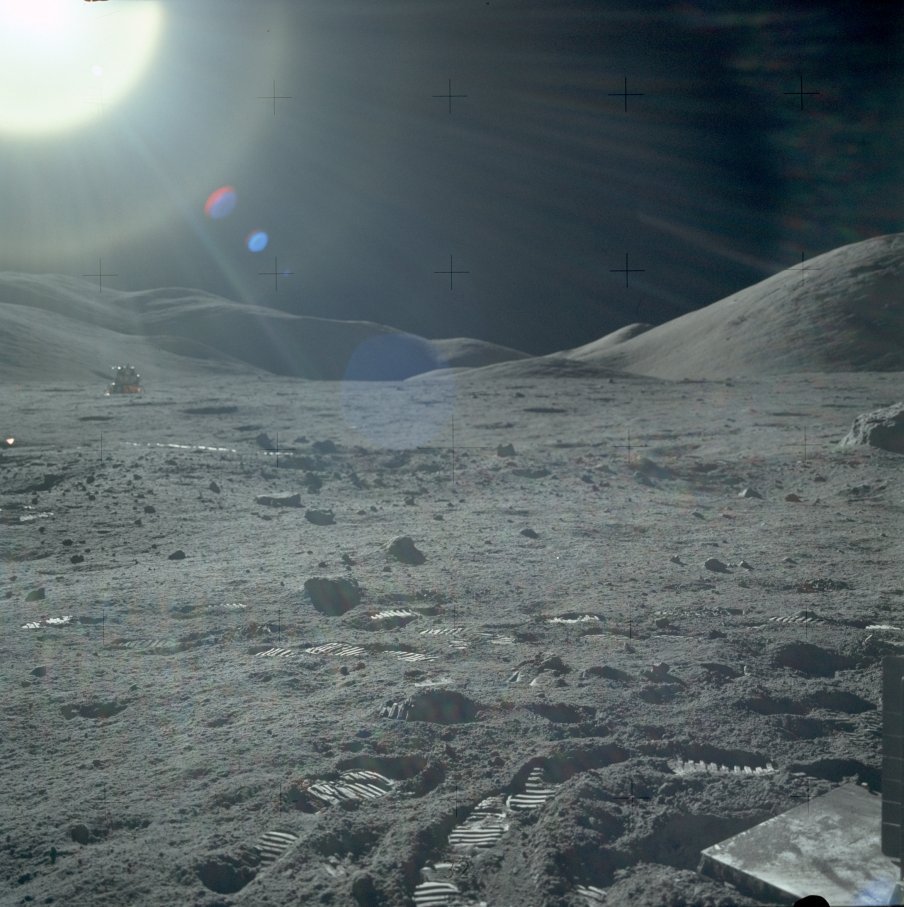
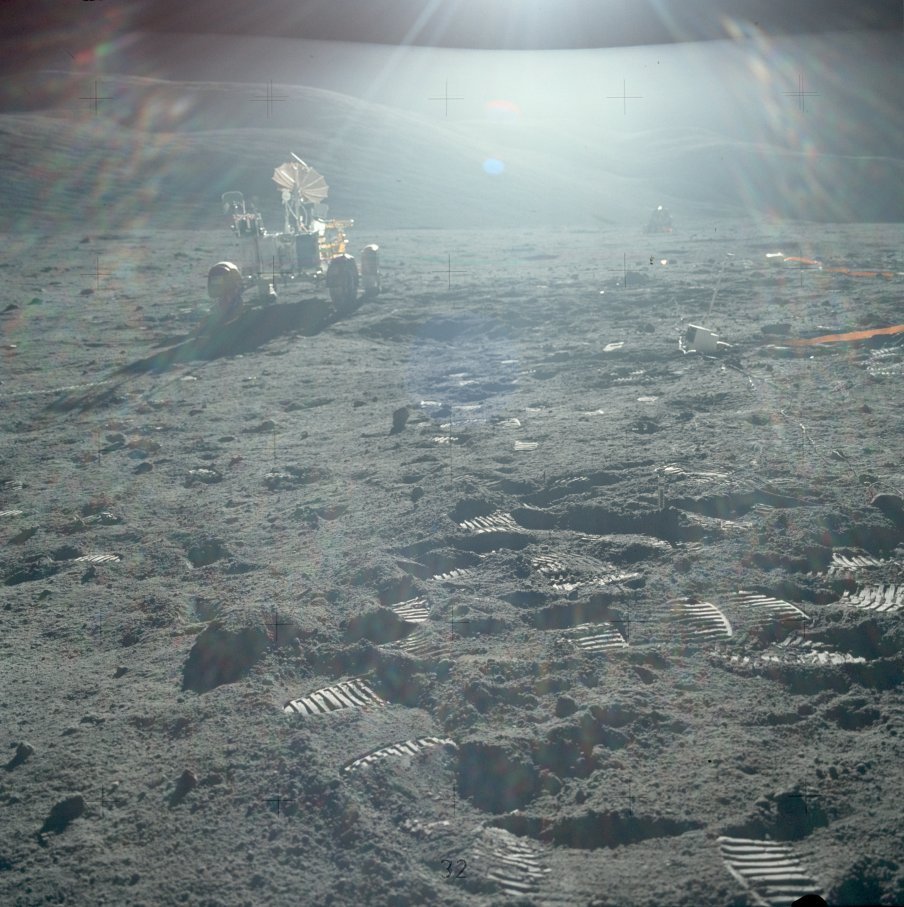
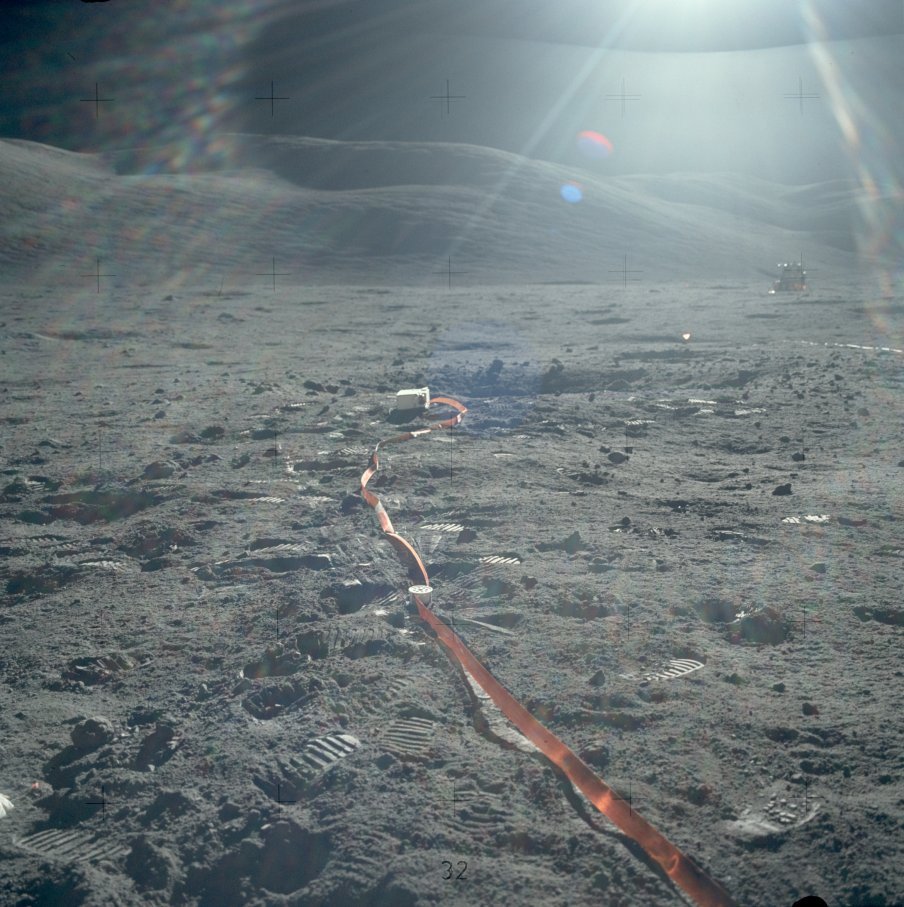
The Moon’s daylight is brighter and harsher than the Earth’s. There is no atmosphere to scatter the light, no clouds to shade it, and no ozone layer to block the sunburning ultraviolet light. However, there is a very, very thin layer of gases on the lunar surface that can almost be called an atmosphere. Technically, it’s considered a surface boundary exosphere.
One of the critical differences between the atmospheres of Earth and the moon is how atmospheric molecules move. Here in the dense atmosphere at the surface of Earth, the molecules’ motion is dominated by collisions between the molecules.The exosphere is so thin that molecules in the lunar exosphere almost never collide with each other. During the lunar night, the Moon’s exosphere mostly falls to the ground. When sunlight returns, the solar wind kicks up new particles to replenish the exosphere.
The intense ultraviolet sunlight kicks electrons off particles in the lunar soil, giving those particles an electric charge that can cause them to levitate. Ambient electric fields lift these charged dust particles as high as kilometers above the surface, forming an important part of the exosphere. Moon dust wrecked havoc with the Apollo spacesuits, which were nearly threadbare by the time they returned to Earth. Levitating dust can get into equipment, spacesuits, and computers, causing damage and shortening the hardware’s useful life. Knowing how much dust is floating around in the exosphere and how it behaves will help engineers design next-generation lunar hardware.
Credit: NASA
-
September 27th, 2013 1:58pm
-
August 8th, 2013 11:00pm
NASA Probe to Solve Mars Atmosphere Mystery
The Mars Atmosphere and Volatile Evolution mission, nicknamed MAVEN, is designed to provide some answers as to why Mars’ atmosphere was stripped into space. From its orbital perch around Mars, MAVEN will track how the solar wind picks away at the planet’s thin atmosphere. The information will then be used to create computer models that move backward in time so scientists can determine when the planet was most suited for life and how long that period lasted. Read more
-
December 7th, 2012 12:20am
Apollo Veteran: Skip Asteroid, Go to the Moon: It’s 40 years to the day that the final mission to the moon launched. Discovery News speaks with Apollo 17 astronaut and geologist Harrison “Jack” Schmitt about where he thinks the Earth’s only satellite came from and why he thinks a NASA manned asteroid mission is a mistake.
“I think an asteroid is a diversion, if the ultimate goal is to get to Mars, you have a satellite only three days away that has a great deal of science as well as resources. The science of the moon has just been scratched. We’ve hardly explored the moon.” — Schmitt
-
November 19th, 2012 4:50pm
NGC 6357’s Cathedral to Massive Stars
Image Credit: NASA, ESA and Jesús Maíz Apellániz (IAA, Spain)“How massive can a normal star be? Estimates made from distance, brightness and standard solar models had given one star in the open cluster Pismis 24 over 200 times the mass of our Sun, nearly making it the record holder. This star is the brightest object located just above the gas front in the above image. Close inspection of images taken with the Hubble Space Telescope, however, have shown that Pismis 24-1 derives its brilliant luminosity not from a single star but from three at least. Component stars would still remain near 100 solar masses, making them among the more massive stars currently on record. Toward the bottom of the image, stars are still forming in the associated emission nebula NGC 6357. Appearing perhaps like a Gothic cathedral, energetic stars near the center appear to be breaking out and illuminating a spectacular cocoon.”
-
August 19th, 2012 11:19pm
-
August 9th, 2012 10:26pm
dvdp:
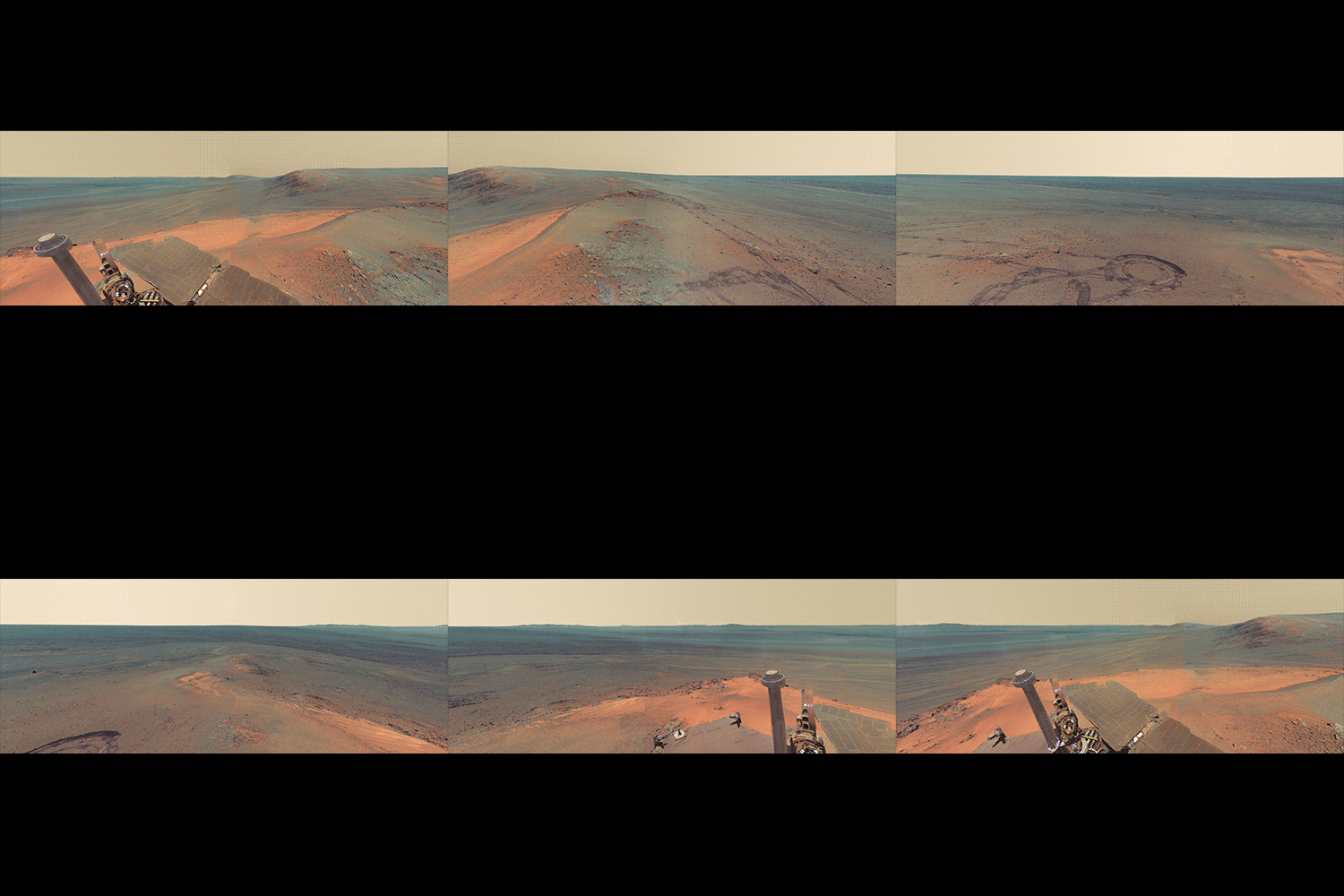
Greeley Haven Mars
This full-circle scene combines 817 images taken by the panoramic camera (Pancam) on NASA’s Mars Exploration Rover Opportunity. It shows the terrain that surrounded the rover while it was stationary for four months of work during its most recent Martian winter. Image Credit: NASA/JPL-Caltech/Cornell/Arizona State Univ.