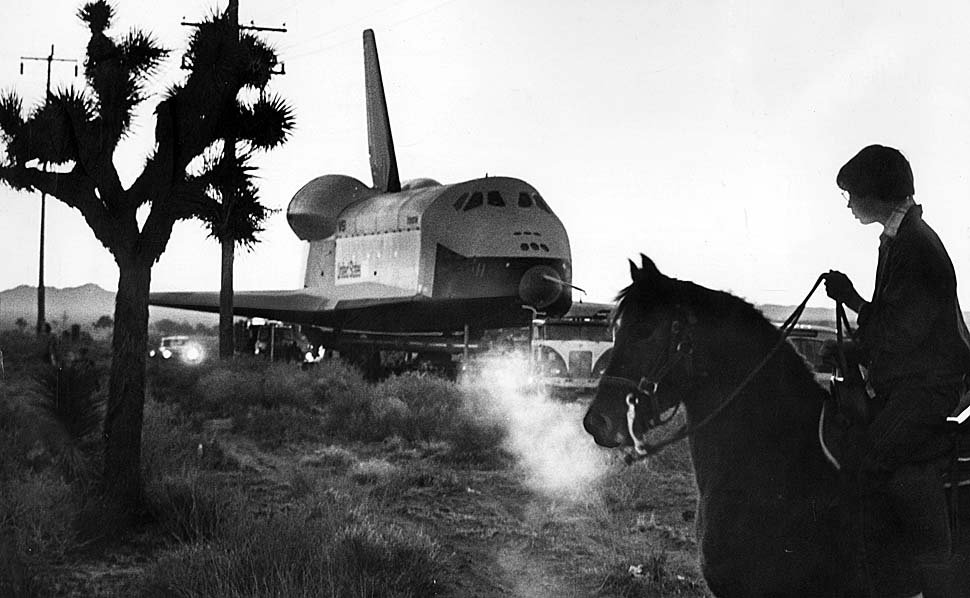
Jan. 31, 1977: A horse and rider watch as the space shuttle Enterprise is towed from Rockwell International’s facility in Palmdale to Edwards Air Force Base for a year of flight tests. Photo: Art Rogers / Los Angeles Times

Jan. 31, 1977: A horse and rider watch as the space shuttle Enterprise is towed from Rockwell International’s facility in Palmdale to Edwards Air Force Base for a year of flight tests. Photo: Art Rogers / Los Angeles Times
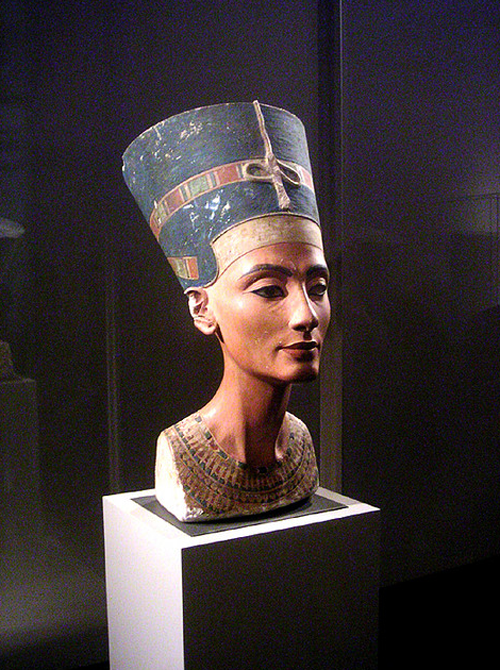
Nefertiti
Bust of Queen Nefertiti.
One of the most famous, valuable and recognisable artefacts from Egypt in the world. Which is why there were hundreds of tourists, just like me, taking pictures of it with a flash on their digital camera and then moaning that the flash reflected off the glass.
It’s attributed to the sculptor Thutmose, as is much of the collection. This bust is said to have heavily influenced modern standards of female beauty. Which is why there are so many beauty parlours named after her I guess…
Her left eye is missing –“She only has the one eye. The left eye is a featureless white plaster void. No one knows why – on a bust so meticulously sculpted and painted even down the rouge on her prominent cheek bones – why does she only have one eye?
Dissertations have been written about the missing eye. It was surmised that the artist, presumed to be Akhenaton’s royal artist Thutmose, may have intended the bust as a study for his students.
Perhaps, some romantically-minded Egyptologists have speculated, the artist felt the bust was simply too perfect and so he removed one eye to avoid offending the gods.
Or perhaps he was just about to apply the second crystal eye when the reign of the heretic king Akhenaton came crashing down about him and his studio. Perhaps the priests of the Theban god Amun were storming the gates of the royal compound at Aketaton and the artist had to bury the unfinished bust in the sand. No one knows what happened to him or, for that matter, to Queen Nefertiti.
There is even a stubborn legend that the missing eye actually exists and that it is wrapped in tissue paper in a box and tucked away somewhere in the vaults of the Berlin museum”
Hmmmm….
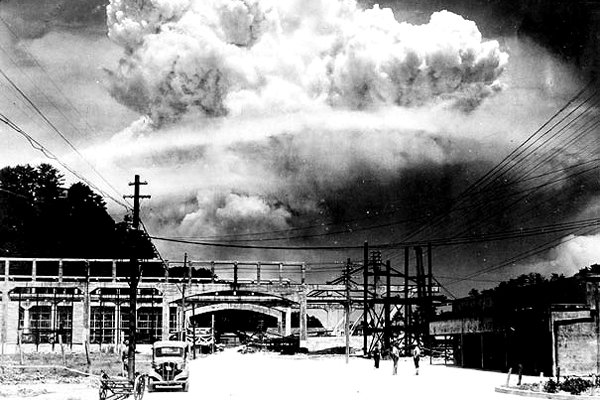
August 9, 1945: An atomic bomb is dropped on Nagasaki.
Three days after the bombing of Hiroshima, a second atomic bomb – “Fat Man” – was detonated over Nagasaki, the third detonation of such a weapon in history. After the bombing of Hiroshima, Harry Truman delivered another message of warning to Japan, saying:
If they do not now accept our terms, they may expect a rain of ruin from the air, the like of which has never been seen on this earth.
Between the August 6 bombing and Japan’s surrender, approximately six million propaganda leaflets were dropped over dozens of Japanese towns. Nagasaki, like Hiroshima, was chosen for its military importance – it was a seaport and an industrial center, and it was also home to around 200,000 people. Of these, an estimated 39,000 were killed in the initial bomb blast, and thousands more died later from injuries and exposure to radiation. The temperature of the blast reached 3,900 °C.
Other atomic bombs were prepared for further attacks, but Japan surrendered (via radio broadcast) on August 15, six days later.