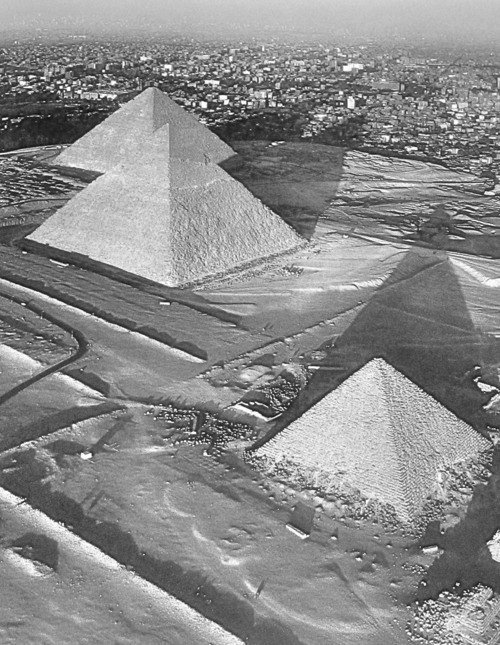
Tag: egypt
-
-
September 23rd, 2012 2:56pm
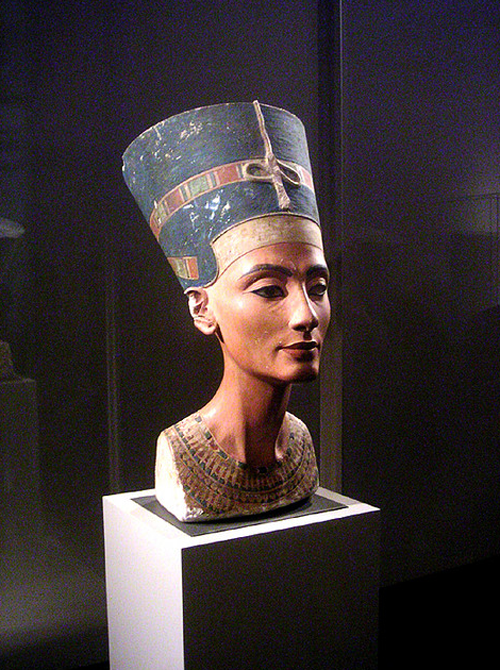
Nefertiti
Bust of Queen Nefertiti.
One of the most famous, valuable and recognisable artefacts from Egypt in the world. Which is why there were hundreds of tourists, just like me, taking pictures of it with a flash on their digital camera and then moaning that the flash reflected off the glass.
It’s attributed to the sculptor Thutmose, as is much of the collection. This bust is said to have heavily influenced modern standards of female beauty. Which is why there are so many beauty parlours named after her I guess…
Her left eye is missing –“She only has the one eye. The left eye is a featureless white plaster void. No one knows why – on a bust so meticulously sculpted and painted even down the rouge on her prominent cheek bones – why does she only have one eye?
Dissertations have been written about the missing eye. It was surmised that the artist, presumed to be Akhenaton’s royal artist Thutmose, may have intended the bust as a study for his students.
Perhaps, some romantically-minded Egyptologists have speculated, the artist felt the bust was simply too perfect and so he removed one eye to avoid offending the gods.
Or perhaps he was just about to apply the second crystal eye when the reign of the heretic king Akhenaton came crashing down about him and his studio. Perhaps the priests of the Theban god Amun were storming the gates of the royal compound at Aketaton and the artist had to bury the unfinished bust in the sand. No one knows what happened to him or, for that matter, to Queen Nefertiti.
There is even a stubborn legend that the missing eye actually exists and that it is wrapped in tissue paper in a box and tucked away somewhere in the vaults of the Berlin museum”
Hmmmm….
-
September 21st, 2012 12:27pm
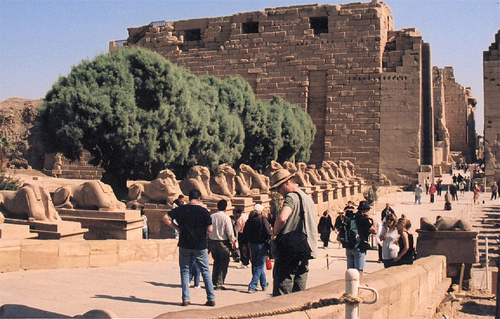
Karnak Temple Complex
The ram-headed sphinx is a symbol of the god Amun and characteristic of the Karnak Temple Complex. A row of ram-headed sphinxes line the walkway between the Luxor Temple and the Precinct of Amun-Re (Temple of Ramesses II) at Karnak. Each ram-headed sphinx (kabsh) holds up a statue of the Pharaoh between its paws, the walkway is therefore known as “Tareeq El-Kebaash” amongst locals.
-
September 18th, 2012 6:13pm
-
June 13th, 2012 3:10pm
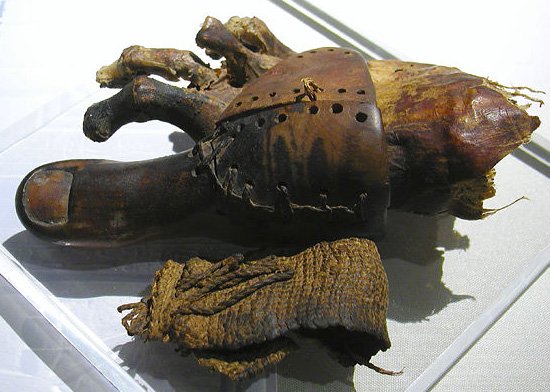
Wood and leather prosthetic toe used to facilitate walking, dated 950-710 BC. Found on a female mummy near Luxor. Source: (BBC)
Ancient Egyptians were at the forefront of medicine. They are regarded as the first formal civilization to document practiced medicine. The Egyptian word for doctor is “wabau”(meaning ritually pure). There were many specialities in Egyptian medicine, including what is known as modern day dentists, ophthalmologists, and proctologists.
whoa
-
June 3rd, 2012 10:49pm
-
June 1st, 2012 6:59am
-
May 30th, 2012 3:17pm
-
May 27th, 2012 10:36pm
-
May 25th, 2012 12:09pm