Month: September 2013
-
-
September 12th, 2013 6:26pm
sicklygeek:
How did you get your start and what advice do you have for someone trying to break in?Back in Middle School and High School I would draw little comics about me and my friends, things that riffed off of the webcomics I was reading and loving at the time. I wasn’t ever really good enough at drawing, and I didn’t have the patience to get better. There were a few false starts when I found friends of friends who were artists and we started doing something together, but they always petered out. I should see if I have anything from those comics that I wouldn’t be too embarrassed putting online – It was all stuff about my friends and me being young angsty teenagers. The one webcomic from those early days that got closest to existing was actually, embarrassingly enough, called “ANGST.”
I started submitting things to publishers around age 18, but didn’t hear anything back. At that point I was dedicating myself pretty heavily to prose fiction, which is what I went to college to study. Doing comics was absolutely on my “to do” list, but I didn’t know anyone in the industry, or any artists who were looking to do comicky stuff, and I was pretty happy writing melodramatic high school dramas, gut wrenching horror, and weird science fiction intermittently during college. I kept reading comics on a weekly basis, despite not being able to afford it (I got very used to negative bank account balances in early college). My sophomore year, I took a class with Scott Snyder (this would have been in 2007). He was just starting to talk to comic publishers, and my familiarity with the comics world, and a similar sensibility meant we got along really really well. I became a kind of sounding board for him while he worked on American Vampire and all the books that followed. I kept working on getting my degree, and started thinking more seriously about comics again, working on scripts and pitches in my spare time and sending them in wherever open submissions could be had. I never got a response, but each script was a little better than the last.
After I graduated from college, I applied for jobs or internships at every single comic book company in the industry. I interviewed with Marvel, IDW, BOOM! and eventually Vertigo, where I got the gig. Met a bunch of cool people, and learned a lot about how the industry works from the inside out. I applied for jobs right out of that in the company, in editorial, but there weren’t any openings. I did some freelance blogging for a bit for an online newspaper, and that led to a job as a copywriter for the ad agency that partnered with the website. I worked there for a year and a half. The goal was still to break into comics, and I had been working on my scripts and pitches all that time. Sending a few in here and there, waiting for a response. I was also still talking story with Scott two or three times a week, especially in the build up to the New 52 with the launch of Batman #1. That fall, two things happened, I was asked to submit a spec script to the head Bat-Editor at DC, and very soon after, DC asked Scott if he would be interested in doing 8-Page backups in each issue of Batman starting with Issue #8. Scott didn’t have room in his schedule, but he asked if I could co-write them with him. Since they already knew who I was from the spec script, they took a chance, and I got my first professional comic published in Batman #8 (a pretty crazy place to start). Then came the Annual, and the chance to pitch for Talon, and it’s all built up from there.
So really, I guess it comes down to a few things:
1. If you want to break into this industry, you need to want it more than anything. You need to be okay with being turned down over and over again, and be willing to keep pushing for it. If you don’t have that fire in you, driving you towards this weird, small industry, then I’d consider pursuing something else.
2. You need to make friends with people who have the same goals as you. If you want to be a comics person, hang out with like-minded, talented people who are equally determined to break through. Making the right friends early on could pay off years and years later. This is a VERY small industry, and the convention circuit means that eventually you get to know pretty much everyone. People recommend friends for jobs before strangers. If someone knows you’re talented and reliable, that’s going to go a long way to help you out.
3. You need to be willing to let go of ideas. There’s nothing I was pitching back in HS or College I would ever consider putting in front of a publisher today without scrapping everything but the core concept and starting from scratch. That’s a terrifying prospect a lot of the time, but you need to be willing to say “I can do this better.”
4. You need to want to get better. I’ve run into a lot of people who think they’re perfect and they just need to be discovered, and then they’ll be instantly successful. I’m going to say 99.9999% of the time that’s not true. You can always be better. You need to push yourself all the time. You always want to be writing something better than the thing you wrote a year ago. You need to pinpoint what doesn’t work, and not fret over it, but rather experiment different methods of overcoming your own weaknesses. Every script you write is a learning experience. Everything you read or watch is a learning experience. Get better by taking it all in and processing it, and consciously TRYING to get better.
5. Write. Or Draw. Or Edit. Or Ink. Or Color. Or Letter. Whatever your passion is, do it. Start working. Get better. I’m not one of those “you need to write every day” people, but the idea behind it is right. You need to work consistently and often to get better at your expertise. If you’re waiting for an opportunity to break into the industry before you write more than a script or two, for instance, that’s not going to work. You need to be willing to get your work up to a professional caliber all on your own before anybody is going to give you that opportunity.
I think that’s most everything… It sure as hell took me a while to write. Hopefully it is helpful and not too rambly.
-
September 12th, 2013 4:47pm
But Solaria was no longer the world of her youth. It was a world without humanity, guarded over by distorted parodies of humanity; humanoid robots that made a mockery of the gentle Daneel and the thought-filled Giskard.— Isaac Asimov – Robots and Empire
-
September 12th, 2013 12:12am
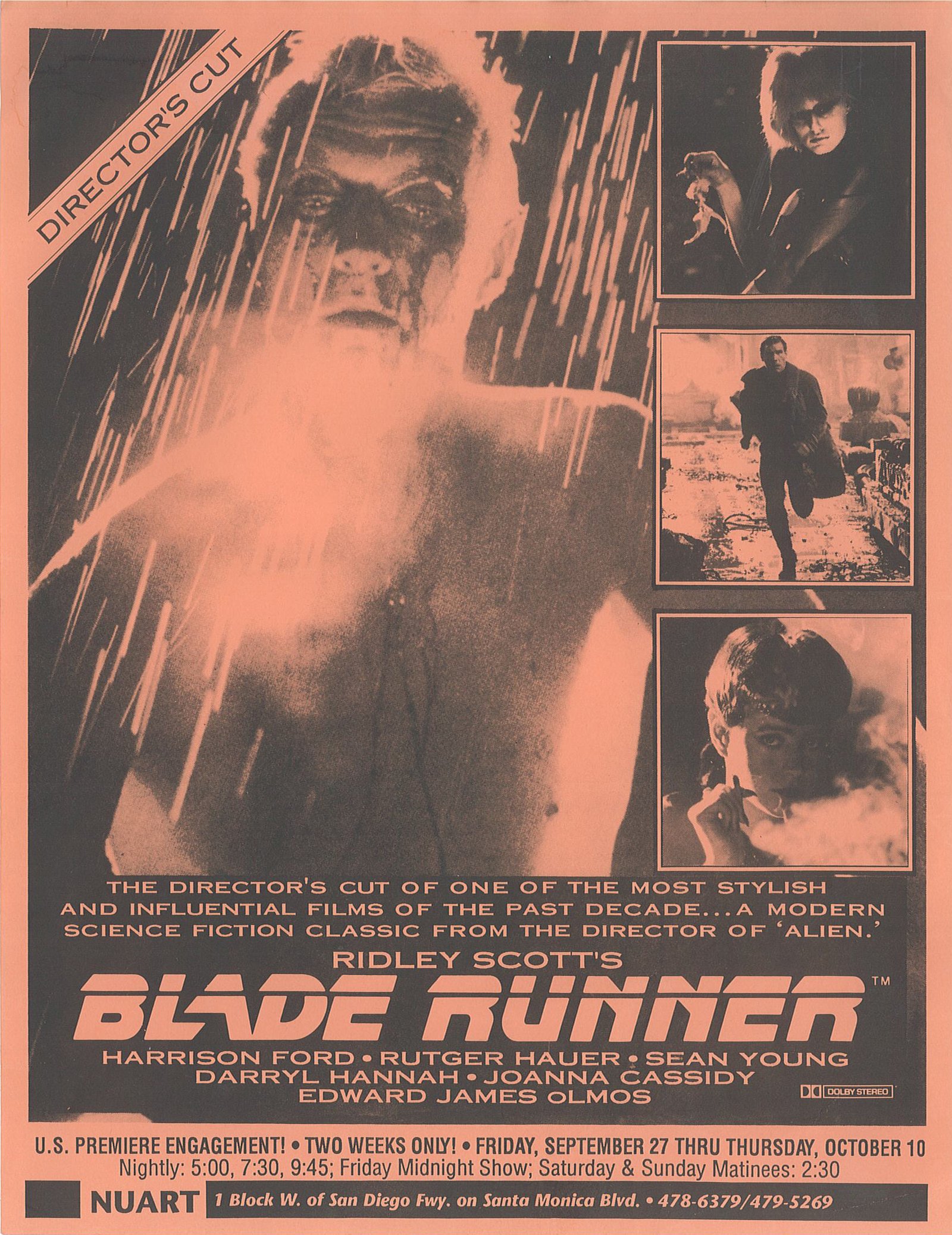
Poster ad for the Blade Runner screening at Nuart theater, 1991.
Although marked as Director’s cut on the poster, the film was actually a 35mm reduction dupe of the 70mm Workprint Ridley used for test screenings in Denver and Dallas in 1982. The success of the Nuart and Castro (October, 1991, right after Nuart) screenings showed Warner Bros the interest in the film and resulted in Ridley Scott being asked to create a genuine “Director’s Cut” for home video release.
-
September 12th, 2013 12:10am
A riot is the language of the unheard.— Martin Luther King Jr. (via anarcho-queer)
-
September 12th, 2013 12:03am
-
September 12th, 2013 12:02am
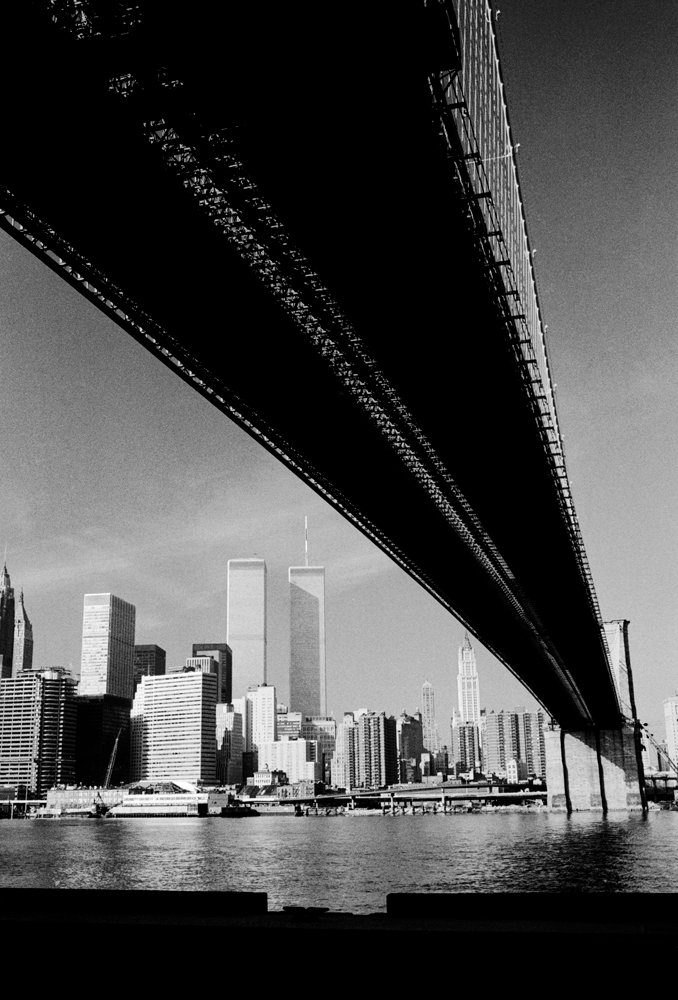
life:
On the anniversary of 9/11, LIFE.com recalls the enormous, glass-and-steel towers that anchored Lower Manhattan for three decades.
(Photo: Alfred Eisenstaedt—TIme & Life Pictures/Getty Images)
-
September 12th, 2013 12:01am
-
September 12th, 2013 12:00am

Christopher Walken, 1976
-
September 11th, 2013 11:59pm